Marine Biodiversity Science Center

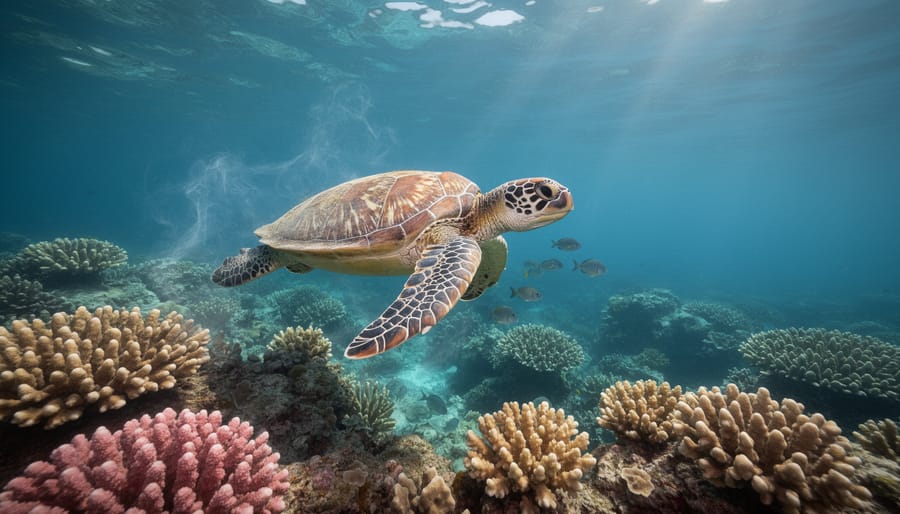
Marine diseases are infectious and non-infectious conditions caused by pathogens, environmental stressors, or genetic factors that affect organisms living in ocean and coastal ecosystems. These diseases range from viral and bacterial infections in fish populations to parasitic outbreaks in coral reefs, and they play a critical role in shaping the health, diversity, and resilience of marine life across the planet.
Understanding marine diseases has never been more urgent. Ocean temperatures are rising, pollution is intensifying, and human activities continue to stress coastal habitats, all of which create conditions where diseases can spread faster and hit harder. A single outbreak can devastate commercially important fisheries, collapse coral reef systems that support thousands of species, and disrupt entire food webs. In 2026, marine biologists are tracking disease events with greater precision than ever before, yet many questions remain about how pathogens interact with host immune systems and how ecosystems respond to repeated disease pressures.
This article explains what marine diseases are, how they work within the context of marine immune systems, and why disease resistance varies so dramatically across species and environments. You’ll learn about the major types of marine diseases affecting everything from microscopic plankton to apex predators, explore how scientists monitor and respond to outbreaks, and discover the real-world conservation strategies being deployed to protect vulnerable populations. We’ll also share how you can get involved in citizen science efforts that track disease patterns in your local waters.
Whether you’re a student trying to grasp the fundamentals of marine pathology, an educator looking for clear explanations to share with others, or a conservation professional seeking practical insights, this guide breaks down the science without the jargon and highlights the collective action already making a difference.
What Marine Diseases Are and Why They Matter
Marine diseases are illnesses that affect organisms living in ocean environments, caused by infectious agents like bacteria, viruses, fungi, and parasites, or by non-infectious factors such as environmental toxins, temperature extremes, and chemical pollutants. These conditions disrupt normal physiological functions in marine life, ranging from microscopic plankton to massive whales, and can spread through populations when conditions favor transmission.
Unlike physical injuries from predators or boat strikes, diseases involve biological or chemical processes that compromise an organism’s health from within. A sea turtle with a propeller wound has suffered trauma, not disease. That same turtle developing fibropapillomatosis, tumor growths linked to a herpesvirus, is experiencing disease. Similarly, diseases differ from normal aging: a twenty-year-old grouper showing slower metabolism and reduced fertility is aging naturally, while a young grouper with skin lesions from a bacterial infection is diseased. The distinction matters because diseases can spread through populations, while injuries and aging typically affect individuals alone.
Marine diseases fall into two broad categories. Infectious diseases result from pathogens that invade host organisms and reproduce, potentially transmitting to other individuals. A reef fish infected with lymphocystis virus can spread it to tank mates through direct contact or contaminated water. Non-infectious diseases stem from environmental factors that don’t spread between organisms but still cause widespread harm. When agricultural runoff creates low-oxygen zones, fish in those areas may develop organ damage, yet they can’t pass that condition to healthy fish in clean water.
Understanding these diseases proves essential for marine survival as ocean conditions shift. Rising temperatures weaken immune responses in many species, making them vulnerable to pathogens they once resisted. Coral reefs face accelerating disease outbreaks as warming seas stress their symbiotic relationships. Fish farms contend with viral epidemics that jump to wild populations. Marine mammals washing ashore show increasing disease burdens linked to pollutants that accumulate in their tissues.
- Pathogen
- A biological agent such as a virus, bacterium, fungus, or parasite that causes disease in a host organism.
- Host
- The marine organism that harbors a pathogen or parasite, providing resources the disease agent needs to survive and reproduce.
- Vector
- An organism that transmits pathogens between hosts without necessarily becoming ill itself, such as parasitic copepods carrying bacteria between fish.
- Outbreak
- A sudden increase in disease cases within a marine population, often triggered by environmental stress or pathogen introduction.
- Epizootic
- The animal equivalent of an epidemic, a widespread disease event affecting large numbers of individuals across multiple locations simultaneously.
- Endemic Disease
- A disease that persists at baseline levels within a marine population or region without causing mass mortality, maintained through constant low-level transmission.
Disease acts as both a natural population regulator and a warning system for ecosystem health. In balanced conditions, endemic diseases cull weak individuals without threatening species survival. When disease outbreaks intensify or new pathogens emerge, they signal deeper problems in ocean environments that demand immediate attention from researchers and conservationists alike.
How Marine Diseases Work: From Infection to Outbreak
The Role of Marine Immune Systems
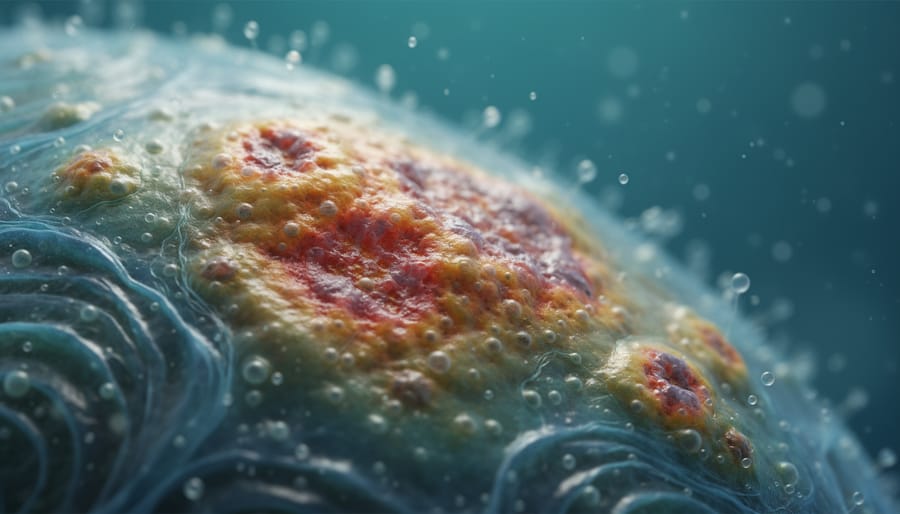
Marine organisms depend on immune defenses that vary dramatically across evolutionary lineages, from the simple cellular responses of sponges to the sophisticated antibody systems of dolphins. Understanding these differences helps explain why some species succumb quickly to pathogens while others mount effective resistance even in stressful conditions.
Invertebrates like sea urchins, mollusks, and crustaceans rely entirely on innate immunity, a fast-acting, non-specific defense system. Specialized blood cells called hemocytes detect invaders through pattern recognition, engulfing bacteria and fungi or releasing antimicrobial compounds. The same structural proteins that help marine animals build their bones and shells often play roles in immune function, forming barriers against infection. This ancient immune strategy works well against common threats but can’t adapt to new pathogens or provide lasting protection after infection.
Fish and marine mammals add adaptive immunity to their defensive toolkit. This system creates targeted antibodies against specific pathogens, remembers past infections, and mounts stronger responses upon re-exposure. Sharks and rays occupy an interesting middle ground with immunoglobulins that differ structurally from those in bony fish, while whales and seals possess immune systems nearly identical to terrestrial mammals, including specialized T-cells that coordinate complex immune responses.
Temperature profoundly affects immune function in marine species. Cold-blooded fish and invertebrates experience slowed immune reactions in cooler water, while warming oceans can overstimulate immune systems, causing inflammatory damage even without active infection.
Environmental Triggers and Stress Factors
Marine organisms evolved immune defenses tuned to stable ocean conditions, but rapid environmental changes now overwhelm these systems. When water temperatures rise even a few degrees above normal ranges, metabolic stress diverts energy away from immune function. Warm-water events suppress the production of antimicrobial compounds in corals and reduce white blood cell activity in fish, creating windows of vulnerability that pathogens exploit. Cold-water species face similar immune suppression when temperatures drop unexpectedly or when warming forces them into marginal habitats.
Pollution compounds these challenges. Heavy metals like mercury and copper interfere with cellular signaling pathways that coordinate immune responses. Microplastics carry pathogenic bacteria directly into digestive systems while causing physical inflammation. Agricultural runoff triggers algal blooms that deplete oxygen, forcing marine animals into chronic stress states where disease resistance plummets. Oil spills coat respiratory surfaces and skin, breaching the physical barriers that normally exclude pathogens.
Ocean acidification weakens the shells and skeletons that provide structural defense for many invertebrates, while also impairing chemoreceptors that detect threats. Habitat degradation removes the refuges where sick or stressed animals would normally recover. Coral reefs that once offered sheltered microhabitats become rubble fields with high pathogen loads. Seagrass beds degraded by coastal development no longer filter water or provide the calm zones crucial for immune recovery.
These stressors rarely act alone. A fish stressed by warming water in a degraded habitat with elevated pollutants faces combined immune suppression far greater than any single factor would cause. Even species adapted to extreme environments show increased disease when multiple stressors intersect, revealing that tolerance has limits when the environment shifts faster than evolution can respond.
Major Categories of Marine Diseases
Viral Diseases in Marine Ecosystems
Viral pathogens represent some of the most devastating disease agents in ocean environments, capable of triggering rapid die-offs across multiple species. Marine viruses infect everything from microscopic plankton to apex predators, often exploiting weakened immune systems during environmental stress.
In commercial aquaculture, white spot syndrome virus remains a WSSV major threat to shrimp farming operations worldwide, causing lesions and systemic failure within days of infection. The virus spreads through water contact and infected tissue, making containment difficult in crowded farm conditions.
Marine mammals face their own viral challenges. Herpesviruses affect sea turtles globally, causing fibropapillomatosis, which produces debilitating tumors on flippers, eyes, and internal organs. Morbilliviruses periodically sweep through seal and dolphin populations, triggering mass strandings when outbreaks coincide with other stressors like food scarcity or temperature extremes.
Fish species contend with viral hemorrhagic septicemia, infectious salmon anemia, and dozens of other pathogens that compromise gills, organs, and immune function. These diseases become particularly severe when rising ocean temperatures or pollution weaken natural defenses, allowing viral loads to overwhelm hosts before recovery mechanisms activate.
Bacterial and Fungal Infections
Bacterial and fungal pathogens thrive in marine environments where they encounter hosts with compromised defenses. Vibriosis, caused by Vibrio bacteria, ranks among the most economically significant bacterial diseases, devastating shellfish populations worldwide. These bacteria multiply rapidly in warm waters and enter oysters, clams, and mussels through filter feeding, triggering massive die-offs in aquaculture operations and wild populations. Fish species face their own bacterial threats, including furunculosis and columnaris disease, which cause skin lesions and internal organ damage.
Fungal infections present a growing concern for coral reefs already stressed by warming oceans. Aspergillosis, caused by the terrestrial fungus Aspergillus sydowii, attacks Caribbean sea fans when dust-borne spores settle on weakened colonies. The fungus digests coral tissue, leaving behind characteristic purple lesions. Other marine organisms, from sea urchins to fish eggs, succumb to fungal infections when environmental stressors like pollution or temperature extremes weaken their natural defenses.
Both bacterial and fungal pathogens are opportunistic, exploiting hosts whose immune systems are already taxed by poor water quality, inadequate nutrition, or thermal stress. A healthy marine organism typically resists these infections through mucus barriers, antimicrobial compounds, and cellular immune responses.
Parasitic Diseases
Marine parasites represent a diverse group of organisms that depend on host species for survival, ranging from single-celled protozoans invisible to the naked eye to crustaceans several centimeters long. Unlike bacterial or viral pathogens, many parasites have complex life cycles involving multiple host species, making their control particularly challenging in open ocean environments.
Sea lice, parasitic copepods from the Lepeophtheirus and Caligotus genera, attach to salmon and feed on their skin and blood. In wild populations, these parasites rarely cause severe harm. However, when salmon density increases, whether in aquaculture facilities or during migration bottlenecks, sea lice multiply rapidly, causing open wounds that lead to secondary infections and death.
Microscopic parasites pose equally serious threats. Ciliates like Cryptocaryon irritans, often called marine ich, infect fish gills and skin, creating white spots and breathing difficulties. Myxozoans, spore-forming parasites, invade fish tissues and can persist undetected until environmental stress triggers an outbreak.
Temperature shifts and crowding amplify parasitic disease severity. Warmer waters accelerate parasite reproduction cycles, while stressed hosts mount weaker immune responses, creating conditions where normally manageable parasite loads become lethal.
Environmentally-Induced Conditions
Not all marine diseases stem from pathogens. Environmental conditions can cause serious health problems in ocean organisms even without bacterial, viral, or parasitic infection. These non-infectious diseases often reveal underlying ecosystem stress and can affect entire populations simultaneously.
Temperature extremes represent a primary environmental stressor. When water temperatures rise beyond a species’ tolerance range, proteins denature, metabolic processes fail, and tissues break down. Cold stress similarly impairs cellular function. These thermal injuries weaken organisms and make them vulnerable to secondary infections.
Harmful algal blooms produce potent neurotoxins and liver toxins that accumulate through the food chain. Filter-feeding shellfish concentrate these compounds, developing paralytic shellfish poisoning that can kill fish, seabirds, and marine mammals. Brevetoxin from red tide algae causes mass fish kills and respiratory distress in sea turtles and dolphins.
Chemical pollutants including heavy metals, pesticides, and industrial compounds cause chronic diseases. Mercury accumulation damages nervous systems. Endocrine-disrupting chemicals interfere with reproduction and development. Oil contamination destroys protective mucous layers and damages internal organs.
Nutritional deficiencies occur when prey availability declines or when pollutants block nutrient absorption. Vitamin deficiencies compromise immune function, leaving marine organisms defenseless against environmental challenges and infectious agents alike.
Where Marine Diseases Have the Greatest Impact
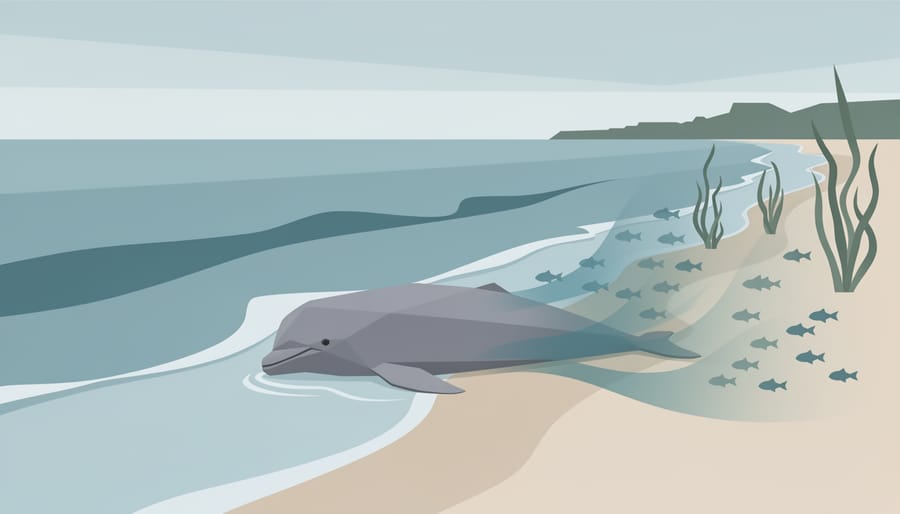
Understanding marine diseases has moved from academic curiosity to urgent necessity as ocean conditions shift and human reliance on marine resources intensifies. This knowledge shapes decisions across multiple sectors, each facing distinct challenges that demand scientifically-informed responses.
Conservation of Threatened Species
Endangered marine populations face a double threat: small numbers make them vulnerable to disease outbreaks that can eliminate entire groups, while the same factors causing their decline, habitat loss, pollution, climate stress, also compromise their immune systems. Disease surveillance now forms a core component of recovery programs for species like Hawaiian monk seals, North Atlantic right whales, and various sea turtle populations. Conservationists monitor disease prevalence to identify when intervention is needed and to understand how environmental changes affect marine life cycles and population resilience. When researchers detected a fungal disease spreading through critically endangered white abalone, they immediately isolated breeding populations and adjusted captive rearing protocols, actions that may have prevented extinction.
Aquaculture and Food Security
Marine diseases cost the global aquaculture industry billions annually, threatening food security for communities that depend on farmed fish and shellfish. Disease outbreaks can wipe out entire farms within days, as seen with infectious salmon anemia in Norway and white spot syndrome in shrimp operations across Asia. The industry now employs marine disease specialists to develop vaccines, improve husbandry practices that boost immunity, and design early detection systems. Understanding how pathogens spread through dense populations has led to better facility designs, quarantine protocols, and breeding programs for disease-resistant stock.
Ecosystem Management and Early Warning Systems
Marine disease patterns reveal broader ecosystem health, functioning as indicators of environmental stress before other symptoms become obvious. Resource managers track disease in key species to guide decisions about:
- Marine protected area placement and management strategies
- Fisheries catch limits when disease weakens target populations
- Water quality standards for coastal development projects
- Climate adaptation planning for vulnerable habitats
- Restoration priorities in degraded marine environments
When mass die-offs occur, rapid disease investigation helps determine whether the cause is infectious or environmental, shaping immediate response efforts and long-term policy.
Public Health Protection
Some marine diseases directly affect humans through seafood consumption or water contact, making surveillance essential for coastal communities. Harmful algal blooms produce toxins that accumulate in shellfish, causing paralytic poisoning in consumers. Monitoring programs test shellfish regularly and close harvest areas when disease organisms or toxins exceed safe levels, preventing illness while protecting the seafood industry’s reputation and economic viability.
Notable Marine Disease Cases and What They Teach Us
Real-world disease outbreaks provide critical insights into how marine organisms respond to pathogens under environmental stress. These cases reveal connections between ocean health, immune function, and conservation priorities.
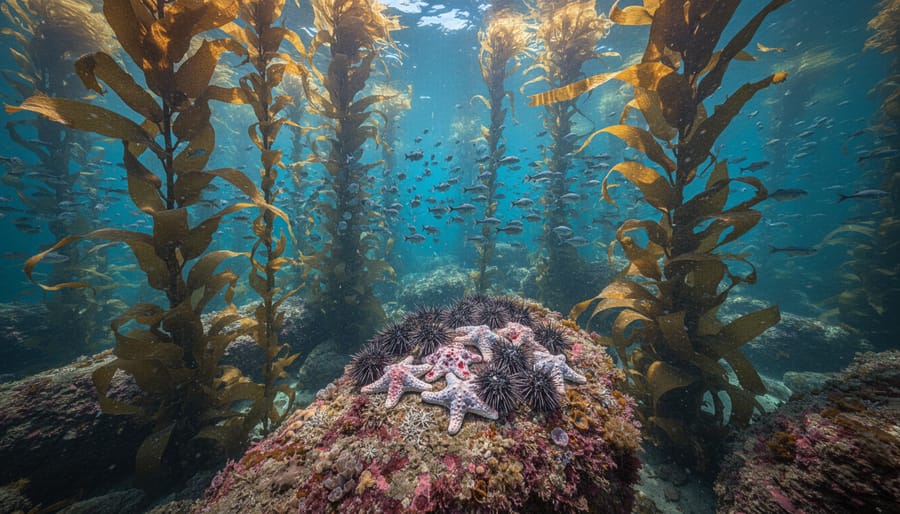
Sea star wasting disease devastated populations along North America’s Pacific coast between 2013 and 2015, affecting more than 20 species from Mexico to Alaska. The disease causes lesions, twisted limbs, and rapid tissue disintegration, often killing sea stars within days. Scientists eventually identified a densovirus as the primary pathogen, but warming ocean temperatures appear to have triggered the outbreak by stressing sea star immune systems. The epidemic taught researchers that temperature stress doesn’t just promote pathogen growth; it also impairs host defenses, creating a double vulnerability. Keystone predator species like Pisaster ochraceus populations crashed by over 90 percent in some areas, allowing prey species to dominate and reshaping entire intertidal communities. Ongoing monitoring shows some populations recovering while others remain suppressed, demonstrating how disease can have lasting ecosystem consequences.
White syndrome and other coral diseases have accelerated reef decline worldwide, often following bleaching events. These disease syndromes cause rapid tissue loss and create bright white bands as coral tissue sloughs away from the skeleton. Research on Caribbean reefs showed that corals stressed by warm water temperatures become far more susceptible to bacterial infections, with disease prevalence jumping from under 5 percent to over 30 percent during heat stress periods. The connection between bleaching and disease revealed that coral immune systems depend on energy from their symbiotic algae; when corals expel these algae under heat stress, they lose both their primary food source and their defensive capacity. This insight shifted conservation strategies toward protecting corals from multiple stressors simultaneously rather than addressing threats one at a time.
Marine mammal mortality events provide windows into disease dynamics in long-lived, intelligent species. The 2006-2007 pilot whale die-off in New England waters, attributed to morbillivirus, killed over 200 individuals and demonstrated how diseases can spread through highly social populations. Necropsies revealed that malnutrition and environmental contaminants had weakened immune responses, allowing the virus to cause severe pneumonia and neurological damage. Similar patterns appeared in Mediterranean monk seals, California sea lions during harmful algal blooms, and Hawaiian monk seals facing toxoplasmosis from terrestrial runoff. These cases underscore that marine mammals face compound threats: their position at the top of food webs means they accumulate contaminants that suppress immunity, while their social behaviors facilitate disease transmission.
Infectious salmon anemia devastated Atlantic salmon aquaculture in the 1990s, costing the industry hundreds of millions of dollars and revealing how crowded farming conditions amplify disease risk. The virus spreads rapidly through densely stocked pens and can jump to wild populations. This case drove improvements in farm management, vaccine development, and disease surveillance while highlighting trade-offs between food production and pathogen control. Similar lessons emerged from white spot syndrome in shrimp farming and viral hemorrhagic septicemia in Great Lakes fisheries.
Each outbreak teaches us that marine diseases rarely act alone. Environmental stressors weaken defenses, human activities spread pathogens, and ecosystem changes determine whether populations recover or collapse.
How Scientists Monitor and Respond to Marine Diseases
Scientists use a multi-layered approach to detect and track marine diseases, combining field observations with advanced laboratory techniques. Early detection is critical, as it allows researchers to understand disease patterns before widespread outbreaks occur.
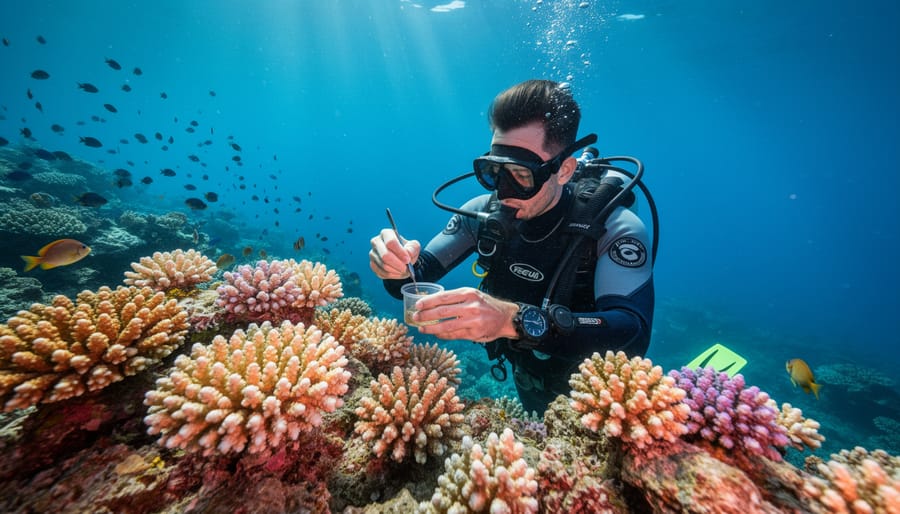
Field surveys form the foundation of disease monitoring. Marine biologists conduct regular visual assessments of populations, looking for visible signs like lesions, unusual behavior, mass die-offs, or physical abnormalities. These surveys happen both in wild populations and at sentinel monitoring sites, locations chosen for their ecological significance or vulnerability to disease. Divers photograph affected organisms, record environmental conditions, and collect samples for laboratory analysis.
Laboratory diagnostics confirm what field observations suggest. Scientists use histopathology to examine tissue samples under microscopes, identifying pathogens and assessing tissue damage. Microbiological cultures grow bacteria and fungi, helping researchers identify specific disease agents. Molecular techniques have revolutionized disease detection: polymerase chain reaction (PCR) tests can identify pathogens from tiny tissue samples or even water samples, while genetic sequencing reveals pathogen strains and tracks how diseases spread across ocean regions.
Population monitoring provides the broader context. Scientists track disease prevalence over time, measuring how many individuals in a population are affected and whether numbers are increasing or decreasing. Long-term datasets reveal seasonal patterns, links to environmental changes, and the effectiveness of management interventions.
Citizen scientists play an increasingly vital role in this surveillance network. Trained volunteers report unusual sightings, photograph diseased organisms, and participate in coordinated survey efforts. Programs like reef monitoring initiatives and marine mammal stranding networks multiply the eyes on the ocean exponentially, covering far more area than professional researchers could alone. This collaboration has proven essential for detecting emerging diseases early, when response efforts have the greatest chance of success.
When outbreaks occur, rapid response teams assess the situation, collect samples, and implement management strategies ranging from quarantine measures in aquaculture settings to public advisories for wild populations.
Common Questions About Marine Diseases
Marine diseases raise important questions for anyone concerned about ocean health, from beachgoers wondering about safety to educators looking for clear answers for students. These questions reflect growing awareness that disease in the ocean connects to broader environmental issues and human well-being.
Can marine diseases spread to humans?
Some marine pathogens can infect humans through direct contact with sick animals, contaminated water, or consumption of infected seafood, though most marine diseases affect only their specific host species. Proper food handling and avoiding contact with visibly sick marine animals reduces risk.
How does climate change affect marine disease outbreaks?
Warming waters expand the range of many pathogens, stress marine immune systems, and create conditions that favor disease transmission. Higher temperatures also accelerate pathogen reproduction and extend the season when diseases remain active.
What should I do if I find a sick or dead marine animal?
Contact local wildlife authorities, marine mammal stranding networks, or coastal management offices rather than touching the animal. Many regions have reporting hotlines, and your observation helps scientists track disease patterns.
Are farmed fish more susceptible to disease than wild populations?
High-density aquaculture environments can facilitate disease transmission, but modern facilities use health monitoring and biosecurity measures to manage risk. Disease can spread between farmed and wild populations when they share water.
Can pollution make marine animals more vulnerable to disease?
Yes, chemical pollutants, plastics, and nutrient runoff weaken immune function and create stressful conditions that make marine organisms easier targets for pathogens.
How can individuals help reduce marine disease threats?
Support habitat protection efforts, reduce pollution through responsible waste disposal, participate in beach cleanups, report unusual marine animal behavior, and engage with citizen science monitoring programs that track ecosystem health.
Understanding these fundamental questions helps bridge the gap between scientific research and public engagement. When more people grasp how marine diseases function and connect to environmental quality, communities become better equipped to support conservation measures that protect both ocean life and the ecosystem services humans depend on. The Marine Biodiversity Science Center offers resources and training for anyone wanting to deepen their knowledge or contribute to disease monitoring efforts in their local waters.
Marine diseases are woven into the fabric of ocean life. They’ve shaped evolutionary paths, regulated populations, and maintained ecological balance for millions of years. A healthy ocean can absorb these natural pressures because robust habitats and stable conditions support strong immune function across species. The challenge we face now isn’t disease itself, but the mounting environmental stressors that tip the scales.
When warming waters, pollution, acidification, and habitat loss converge, they create conditions where diseases transform from background noise into conservation crises. Weakened immune systems can’t mount effective defenses. Pathogens spread more easily. Recovery slows. What marine organisms once handled becomes overwhelming. The sea star wasting outbreaks, coral disease epidemics, and mass mortality events we’ve witnessed aren’t random catastrophes. They’re symptoms of ecosystems under siege.
Protecting marine habitats isn’t just about preserving beautiful places. It’s about maintaining the environmental stability that allows immune systems to function and populations to withstand disease pressure. Marine protected areas, pollution reduction, and climate action all contribute to disease resistance at the ecosystem level.
You can be part of the solution. Citizen science programs need volunteers to monitor populations, document unusual mortality events, and collect basic health observations. Your local data feeds into larger surveillance networks that help scientists detect problems early. The Marine Biodiversity Science Center connects passionate individuals with research teams, educational programs, and conservation initiatives where your contribution matters.
Whether you’re tracking tide pool species, supporting policy change, or simply learning more about the ocean you care about, you’re strengthening the collective effort to protect marine life from the diseases we can prevent and the conditions we can improve.

jessica
Ava Singh is an environmental writer and marine sustainability advocate with a deep commitment to protecting the world's oceans and coastal communities. With a background in environmental policy and a passion for storytelling, Ava brings complex topics to life through clear, engaging content that educates and empowers readers. At the Marine Biodiversity & Sustainability Learning Center, Ava focuses on sharing impactful stories about community engagement, policy innovations, and conservation strategies. Her writing bridges the gap between science and the public, encouraging people to take part in preserving marine biodiversity. When she’s not writing, Ava collaborates with local initiatives to promote eco-conscious living and sustainable development, ensuring her work makes a difference both on the page and in the real world.