Marine Biodiversity Science Center

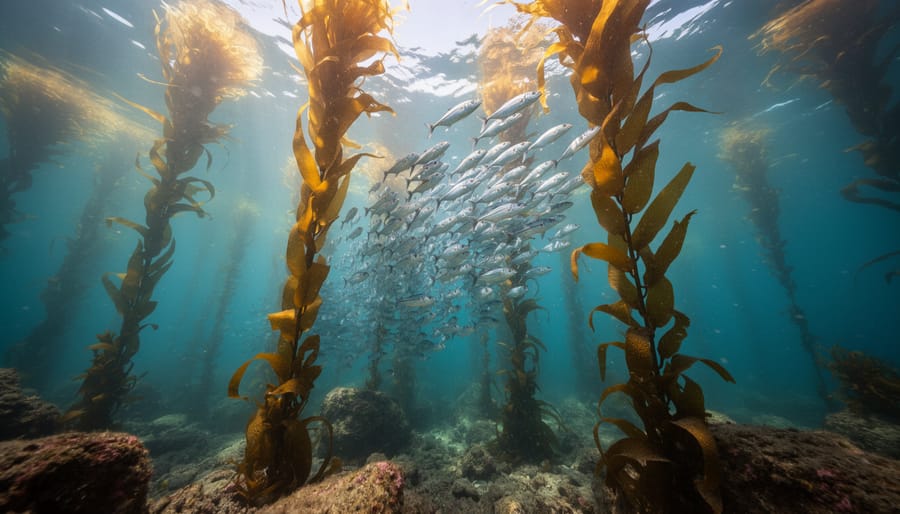
Beneath the ocean’s surface, towering forests of kelp sway in rhythmic motion, creating one of Earth’s most productive and biodiverse ecosystems. These underwater giants, some growing up to two feet per day, form dense canopies that shelter thousands of species—from tiny invertebrates to sea otters and commercially valuable fish. Kelp forests span over 25% of the world’s coastlines, yet they remain largely invisible to those who don’t venture beneath the waves.
These marine ecosystems rival tropical rainforests in their ecological significance. A single kelp forest can support more than 1,000 species, providing nursery grounds for juvenile fish, hunting territories for apex predators, and critical carbon sequestration that helps combat climate change. Marine biologist Dr. Sarah Chen describes her first dive into a kelp forest as “entering an alien cathedral—shafts of sunlight filtering through golden-brown fronds, while fish darted between the stalks like birds through trees.”
Unfortunately, these vital ecosystems face mounting threats. Rising ocean temperatures, pollution, and the loss of key predators have led to dramatic kelp forest decline in many regions. Some areas have lost over 90% of their kelp coverage in recent decades, triggering cascading effects throughout coastal food webs.
Understanding kelp forest ecology, recognizing the dangers they face, and participating in conservation efforts can help reverse this trend. This comprehensive guide explores how we can protect these underwater treasures for future generations.
What Makes Kelp Forests So Extraordinary
The Underwater Architecture of Kelp
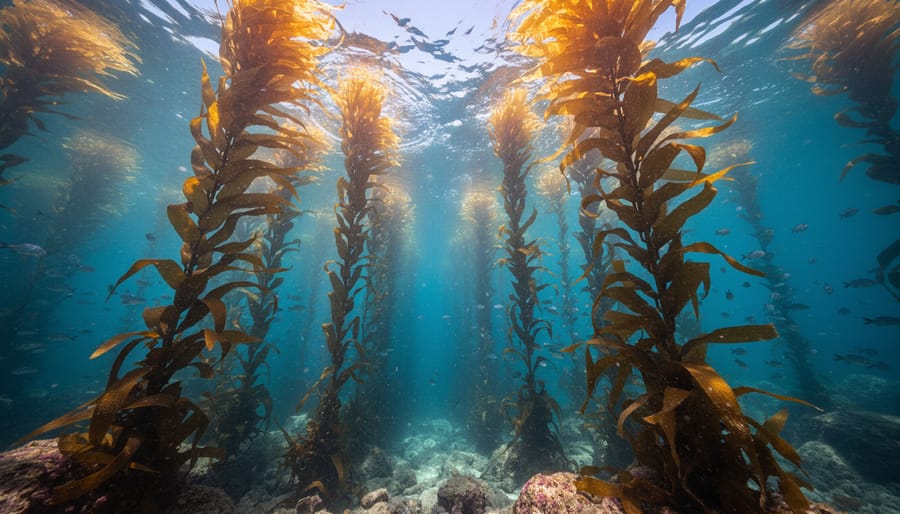
Kelp forests possess a remarkably elegant structure that creates multiple levels of habitat, much like the stories of a building. Each giant kelp plant consists of three main components working in harmony to thrive in dynamic ocean conditions.
At the foundation lies the holdfast, a root-like structure that anchors the kelp firmly to rocky substrate on the seafloor. Unlike true roots, holdfasts don’t absorb nutrients but instead grip tightly to rocks, creating a complex maze of branching extensions. This tangled structure becomes a bustling neighborhood for countless invertebrates, fish juveniles, and algae seeking shelter from predators and currents.
Rising from the holdfast, the stipe—similar to a plant’s stem—stretches upward through the water column. Long and flexible, stipes can grow remarkably fast, sometimes up to two feet per day under ideal conditions. Their flexibility allows them to bend and sway with surge and currents rather than breaking, while their length determines how many vertical zones the forest creates.
Along the stipes, leaf-like blades photosynthesize and produce energy for growth. At the base of many blades sit gas-filled pneumatocysts, small flotation bulbs that buoy the blades toward the sunlight-rich surface waters. This creates the iconic kelp canopy where blades form a dense floating mat, dramatically reducing wave energy and creating calm conditions below.
This vertical architecture transforms a flat seafloor into a three-dimensional ecosystem. Different species occupy each zone—surface canopy dwellers, mid-water column residents, and seafloor communities—maximizing the biodiversity these forests can support.
Where Kelp Forests Thrive
Kelp forests flourish in cool, nutrient-rich waters along temperate and polar coastlines around the world, creating some of the ocean’s most productive ecosystems. These underwater forests require specific conditions to thrive: cold water temperatures typically between 42-72°F (6-20°C), rocky substrates for attachment, and clear waters that allow sunlight to penetrate to depths where kelp can photosynthesize.
The most extensive kelp forests stretch along the Pacific coast of North America, from Alaska’s frigid waters down through California’s Channel Islands. Here, giant kelp can grow up to two feet per day in ideal conditions. The coasts of Chile, Argentina, and Peru host vast kelp forests in the Southern Hemisphere, while Tasmania, southern Australia, and New Zealand support diverse kelp communities unique to their regions.
Northern Europe’s coastlines, including Norway, Scotland, and Ireland, harbor important kelp ecosystems, as do the waters surrounding South Africa’s Cape Peninsula. Japan and Korea’s coastal waters also feature extensive kelp beds that have supported local communities for centuries. These global kelp forest regions face varying conservation challenges, making international collaboration essential for their protection and the incredible biodiversity they support.
A Bustling City Beneath the Waves: Biodiversity in Kelp Forests
The Residents: Species That Call Kelp Home
Kelp forests support an astonishing diversity of life, functioning as underwater apartment complexes where thousands of species find everything they need to survive. These towering algae create a three-dimensional habitat with distinct zones, each hosting different communities of residents.
Fish species are perhaps the most visible inhabitants. Rockfish seek shelter among kelp fronds, their mottled patterns providing camouflage against predators. Schools of sardines and anchovies navigate through the swaying canopy, while kelp bass patrol the forest floor. These fish don’t just pass through—many species spend their entire lives here, and kelp forests serve as critical nursery grounds where juvenile fish grow to adulthood, protected from open-ocean predators.
The invertebrate community is equally impressive. Sea urchins graze on kelp holdfasts, playing a complex role as both resident and potential destroyer. Abalone cling to rocks beneath the canopy, while sea stars, crabs, and lobsters prowl the forest floor. Tiny amphipods and isopods create entire ecosystems within a single kelp blade, numbering in the hundreds on a single frond.
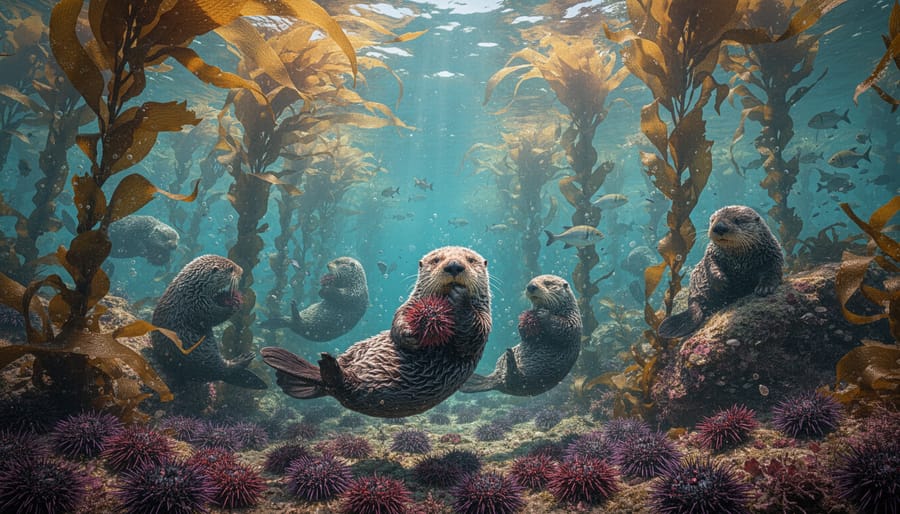
Marine mammals have intimate relationships with kelp forests. Sea otters famously anchor themselves in kelp while resting, wrapping the fronds around their bodies to avoid drifting. They’re also crucial predators, controlling sea urchin populations that might otherwise devastate the forest. Harbor seals and sea lions hunt fish within the kelp, using the structure to their advantage.
Even seabirds benefit from kelp forests. Cormorants dive deep into the canopy pursuing fish, while gulls and terns feed on species that venture near the surface. This interconnected web demonstrates how kelp forests support biodiversity from the seafloor to the sky, making their conservation essential for countless species’ survival.
The Keystone Role of Sea Otters and Other Predators
Understanding kelp forests requires understanding the invisible web of relationships that hold them together. At the heart of this web lies a fascinating ecological principle called a trophic cascade, where predators at the top of the food chain create ripple effects throughout the entire ecosystem.
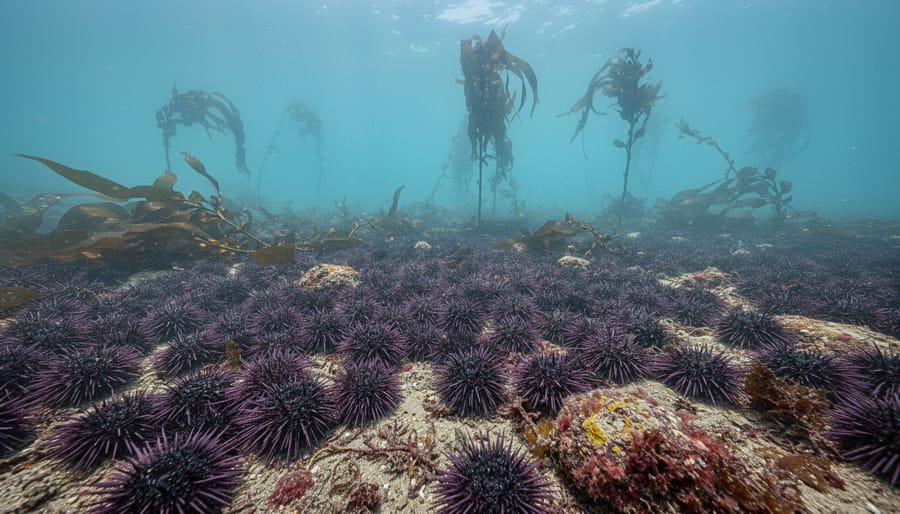
Sea otters serve as the quintessential example of a keystone species in kelp forests. These charismatic marine mammals maintain ecosystem balance by feeding on sea urchins, which would otherwise devour kelp at unsustainable rates. When sea otters disappeared from large portions of their historic range due to the fur trade, scientists observed dramatic ecosystem collapse. Sea urchin populations exploded, creating what marine biologists call “urchin barrens”—underwater deserts where diverse kelp forests once thrived.
Dr. Sarah Mitchell, a marine ecologist who has studied California’s kelp ecosystems for fifteen years, describes witnessing the transformation firsthand: “In areas where sea otters returned, we watched the forests regenerate within years. It was like watching a time-lapse of hope unfolding underwater.”
Other predators play crucial supporting roles in this delicate balance. Sunflower sea stars, sheephead fish, and spiny lobsters also feed on urchins, creating redundancy in the system that buffers against disruption. However, climate change and disease have devastated sunflower sea star populations along the Pacific coast, removing another critical check on urchin numbers.
Conservation organizations now offer volunteer opportunities for citizen scientists to monitor sea otter populations and track kelp forest health, recognizing that protecting these keystone predators is fundamental to preserving entire underwater ecosystems for future generations.
Beyond Biodiversity: Ecosystem Services We Can’t Afford to Lose
Climate Heroes: How Kelp Forests Fight Climate Change
Kelp forests stand as powerful allies in our fight against climate change, functioning as underwater carbon capture systems that rival terrestrial forests in their efficiency. These marine giants absorb carbon dioxide through photosynthesis at remarkable rates—some species can grow up to two feet per day, sequestering carbon as they build their massive fronds and holdfasts. When kelp tissue dies and sinks to the deep ocean floor, it can lock away carbon for centuries, a process known as blue carbon storage.
Dr. Sarah Chen, a marine biologist studying kelp restoration in British Columbia, shares her excitement: “We’re discovering that kelp forests remove approximately 20 times more carbon per acre than land forests. It’s genuinely inspiring to witness their potential as a nature-based climate solution.”
Beyond carbon sequestration, kelp forests buffer coastal communities against ocean acidification by absorbing excess carbon dioxide from surrounding waters, creating refuges where pH levels remain more stable. This protective effect supports countless marine species struggling to adapt to changing ocean chemistry.
Volunteer programs worldwide now engage citizens in kelp restoration projects, from transplanting young kelp to monitoring forest health. These hands-on opportunities allow everyday ocean enthusiasts to become climate heroes themselves, contributing directly to this promising conservation strategy.
Supporting Coastal Communities and Economies
Kelp forests serve as vital economic pillars for countless coastal communities worldwide. These underwater ecosystems support thriving fisheries by providing essential nursery habitat for commercially important species like rockfish, lingcod, and abalone. Many fishing families depend on kelp forest health for their livelihoods, as these habitats generate an estimated $500 million annually in the United States alone through direct and indirect fisheries benefits.
Beyond commercial fishing, kelp forests attract nature enthusiasts and divers, creating tourism opportunities that inject revenue into local economies. Marine tour operators, dive shops, and coastal businesses benefit from visitors eager to explore these magnificent underwater gardens.
For Indigenous communities along Pacific coastlines, kelp forests hold profound cultural and economic significance extending back thousands of years. Traditional harvesting practices for food, medicine, and materials continue today, representing crucial connections to ancestral knowledge. Coastal First Nations have long served as stewards of these ecosystems, and their traditional ecological wisdom increasingly informs modern conservation approaches.
Marine biologist Dr. Sarah Chen emphasizes this interconnection: “Protecting kelp forests means protecting the communities who depend on them. When we engage local knowledge holders and fishers in conservation planning, we create solutions that benefit both ocean health and human wellbeing.”
The Perfect Storm: Threats Facing Kelp Forests Today
Rising Temperatures and Marine Heat Waves
Ocean warming represents one of the most severe threats facing kelp forests worldwide, with marine heat waves becoming increasingly frequent and intense. These underwater ecosystems thrive in cool, nutrient-rich waters, typically between 5 and 20 degrees Celsius. When temperatures rise beyond these optimal ranges, kelp experiences physiological stress, reduced growth, and increased vulnerability to disease and grazing pressure.
The devastating climate change impacts on kelp forests have been documented across multiple regions. Along California’s Northern Coast, a prolonged marine heat wave from 2014 to 2016 decimated bull kelp forests, with some areas losing over 90 percent of their kelp canopy. The warm waters weakened the kelp while simultaneously triggering a population explosion of purple sea urchins, which consumed what remained of these underwater forests.
Tasmania’s giant kelp forests have experienced similarly dramatic losses. Rising ocean temperatures enabled the range expansion of sea urchins southward, creating urchin barrens where once-thriving kelp ecosystems stood. Marine biologist Dr. Cayne Layton, who has studied these changes firsthand, describes surveying former kelp forests now transformed into barren seafloors: “It’s like watching an underwater rainforest disappear before your eyes.”
Norway, Japan, and Australia’s Great Southern Reef have all reported significant kelp declines linked to warming waters. These losses ripple through entire marine food webs, affecting countless species dependent on kelp forest habitats for survival.
Sea Urchin Barrens: When Balance Tips Too Far
In healthy kelp forests, sea urchins play a modest role, grazing on algae while their populations remain in check through natural predation. However, when this balance collapses, these spiny herbivores can transform vibrant underwater forests into barren wastelands in a matter of months.
The cascade typically begins with the overfishing of predators like sea otters, sunflower sea stars, and certain fish species that naturally control urchin numbers. Without these predators, urchin populations explode exponentially. Climate change compounds the problem, as warming waters stress kelp while simultaneously boosting urchin metabolism and appetite. Recent outbreaks of sea star wasting disease along the Pacific coast have further decimated predator populations, removing a crucial check on urchin numbers.
The result is devastating: massive urchin herds can consume entire kelp forests, leaving behind only bare rock and purple-tinged deserts devoid of the biodiversity these ecosystems once supported. Marine biologist Dr. Laura Chen describes witnessing this transformation firsthand: “Returning to a dive site that was once teeming with life, only to find endless stretches of urchin barrens, is heartbreaking.”
Pollution, Sedimentation, and Other Human Pressures
Beyond climate change and sea urchin overpopulation, kelp forests face mounting pressure from human activities along our coastlines. Nutrient pollution from agricultural runoff and sewage discharge triggers harmful algal blooms that block sunlight kelp needs for photosynthesis. These excess nutrients also fuel the growth of turf algae, which compete directly with kelp for space on rocky substrates.
Coastal development introduces sedimentation that smothers kelp holdfasts and clouds the water, reducing light penetration. Marine biologist Dr. Sarah Chen recalls surveying a once-thriving kelp bed near a construction site: “The water clarity had dropped by 60 percent in just two years. We found kelp struggling to survive under a blanket of sediment.”
Invasive species pose another significant threat. Non-native herbivores can decimate kelp populations, while invasive algae outcompete native kelp for resources. The good news? Community-based monitoring programs desperately need volunteers to track water quality and document these stressors. Your observations can provide crucial data that helps scientists and policymakers protect these vital ecosystems before damage becomes irreversible.
Conservation in Action: Protecting and Restoring Kelp Forests
Marine Protected Areas and Legal Frameworks
Marine Protected Areas (MPAs) have emerged as powerful tools for safeguarding kelp forests from destructive practices like overfishing and coastal development. These designated zones restrict harmful activities while allowing ecosystems to recover and thrive. California’s network of MPAs offers an inspiring success story—established in 2012, these protected waters have seen remarkable kelp forest regeneration, with some areas experiencing a 60% increase in kelp density within just five years.
Australia’s Great Southern Reef benefits from similar protections, where MPAs help maintain the delicate balance between kelp forests and grazing sea urchins. Marine biologist Dr. Sarah Chen recalls her first survey in Tasmania’s newly established MPA: “Watching a healthy kelp canopy sway above us, teeming with fish we hadn’t seen in years, reminded me why this work matters.”
Legal frameworks like the Marine Life Protection Act in California and Canada’s Oceans Act provide the regulatory backbone for these conservation efforts. These laws enable communities and scientists to collaborate on management plans that balance ecological needs with sustainable use.
For those inspired to contribute, volunteer opportunities abound in MPA monitoring programs, where citizen scientists help track kelp health and biodiversity—turning passion into meaningful conservation action.
Restoration Projects Making a Difference
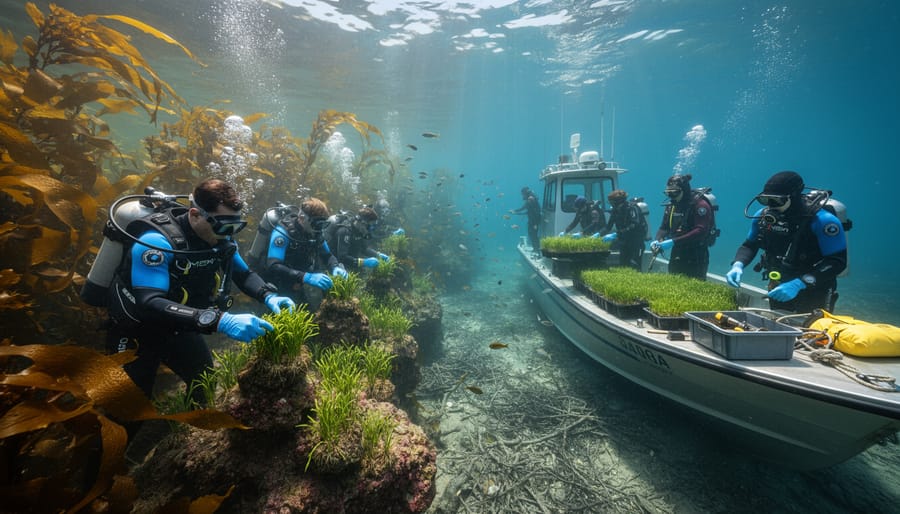
Across the globe, dedicated teams are turning the tide for kelp forests through innovative restoration programs. One of the most successful approaches involves urchin removal initiatives, where divers manually harvest purple sea urchins that have overgrazed kelp beds. In Northern California, The Nature Conservancy’s program has cleared thousands of urchins from barren reefs, allowing kelp to naturally regenerate in previously denuded areas.
Kelp transplantation efforts are also showing remarkable results. Scientists carefully attach young kelp sporophytes to rocky substrates, essentially replanting underwater forests one frond at a time. In Tasmania, restoration teams have successfully transplanted giant kelp, creating seed populations that can spread naturally along the coastline.
Dr. Maria Santos, a marine biologist with fifteen years of restoration experience, recalls her most rewarding moment: “We returned to a site we’d been working on for three years, and it had transformed into a thriving kelp canopy. Fish were everywhere, sea stars clung to the rocks, and otters were feeding in the area. Seeing that transformation reminds you why this work matters so deeply.”
Emerging techniques include deploying artificial reef structures that provide attachment surfaces for kelp spores and using drones to map restoration sites more efficiently. Some programs are even exploring kelp farming as a way to produce transplant material while creating economic opportunities for coastal communities.
These efforts demonstrate that with sustained commitment and community support, we can restore these vital ecosystems. Many restoration projects welcome trained volunteers, offering opportunities for citizens to directly contribute to ocean conservation.
Community Science and Monitoring
Citizen scientists play an invaluable role in protecting kelp forests by contributing thousands of monitoring hours that professional researchers simply couldn’t accomplish alone. Volunteers participate in underwater surveys, photographing kelp canopy health, counting fish species, and recording water temperatures—data that helps scientists track changes over time and identify early warning signs of decline.
Programs like Reef Check and local dive clubs have trained hundreds of recreational divers to conduct standardized surveys, creating vast datasets spanning entire coastlines. Marine biologist Dr. Sarah Chen recalls how volunteer observations first alerted her team to unusual kelp die-offs: “A group of citizen divers noticed changes weeks before our scheduled surveys. Their quick reporting allowed us to investigate the cause immediately.”
Shore-based volunteers also contribute by monitoring beach-cast kelp, which provides insights into forest health and storm impacts. You don’t need diving certification to help—many programs welcome snorkelers, kayakers, and even land-based observers who document kelp beds from coastal viewpoints using simple protocols.
Getting involved is straightforward: contact local aquariums, marine sanctuaries, or university marine labs to find training opportunities. Your observations, combined with those of fellow volunteers worldwide, create the comprehensive monitoring networks essential for effective kelp forest conservation.
How You Can Help Save Kelp Forests
Join the Effort: Volunteer Opportunities
Whether you’re an experienced diver or prefer to contribute from shore, numerous volunteer opportunities await those passionate about kelp forest conservation. The Marine Biodiversity Science Center offers their flagship Kelp Forest Monitoring Program, where certified divers conduct quarterly underwater surveys to track species abundance, measure canopy density, and document seasonal changes. These observations contribute directly to scientific databases used by researchers worldwide.
For those who prefer land-based involvement, the Center’s Kelp Restoration Project welcomes volunteers to help cultivate juvenile kelp in coastal nurseries, prepare substrates for transplantation, and assist with data entry and analysis. No previous experience is required, as training is provided for all participants.
Additional opportunities exist through organizations like Ocean Conservancy’s coastal cleanup initiatives, which remove marine debris that threatens kelp ecosystems. The Reef Check Foundation trains citizen scientists in kelp forest survey techniques through weekend workshops, enabling participants to contribute valuable data while learning about marine ecology.
Educational outreach programs also need volunteers to help develop curriculum materials, lead school presentations, and staff community events. Marine biologist Dr. Sarah Chen shares, “Volunteers are the backbone of our conservation efforts. Every person who dedicates their time creates ripples of positive change throughout these vital ecosystems.”
Everyday Actions That Make an Impact
Protecting kelp forests starts with choices we make every day. When shopping for seafood, choose sustainably harvested options certified by programs like the Marine Stewardship Council, which helps reduce overfishing and protects marine ecosystems. Reducing your carbon footprint through energy conservation, using public transportation, and supporting renewable energy directly combats ocean acidification and warming that threaten kelp forests.
Participate in beach cleanups to prevent plastic and pollutants from entering ocean waters where they can smother kelp and harm marine life. Marine biologist Dr. Sarah Chen shares, “I’ve seen volunteers remove tons of debris from coastal areas, giving kelp forests a fighting chance to recover.”
Support organizations dedicated to kelp restoration through donations or hands-on volunteer opportunities. Many aquariums and research institutions offer citizen science programs where you can help monitor kelp health or even participate in restoration dives after basic training.
Finally, spread awareness by sharing what you’ve learned about kelp forests with your community. Education creates a ripple effect that inspires others to act. Every conversation, sustainable choice, and hour volunteered contributes to protecting these vital underwater forests for future generations.
The fate of underwater kelp forests rests in our collective hands, yet there is genuine reason for hope. From the passionate marine biologists diving into cold waters to document these ecosystems, to coastal communities organizing restoration projects, people worldwide are taking action. The challenge is significant—climate change, pollution, and overexploitation continue to threaten these vital habitats—but the solutions are within reach when we work together.
Every action matters, whether you’re a scientist contributing research, an educator inspiring the next generation, or someone simply learning about kelp forests for the first time. Consider volunteering with local marine conservation groups, participating in citizen science programs that monitor kelp health, or supporting sustainable seafood choices that protect these ecosystems. Share what you’ve learned with friends and family to expand awareness.
Ready to make a difference? Join our environmental e-network today to connect with fellow ocean advocates, receive updates on kelp forest conservation initiatives, and discover hands-on opportunities to protect these remarkable underwater habitats. Together, we can ensure that kelp forests continue to thrive for generations to come.

jessica
Ava Singh is an environmental writer and marine sustainability advocate with a deep commitment to protecting the world's oceans and coastal communities. With a background in environmental policy and a passion for storytelling, Ava brings complex topics to life through clear, engaging content that educates and empowers readers. At the Marine Biodiversity & Sustainability Learning Center, Ava focuses on sharing impactful stories about community engagement, policy innovations, and conservation strategies. Her writing bridges the gap between science and the public, encouraging people to take part in preserving marine biodiversity. When she’s not writing, Ava collaborates with local initiatives to promote eco-conscious living and sustainable development, ensuring her work makes a difference both on the page and in the real world.