Marine Biodiversity Science Center

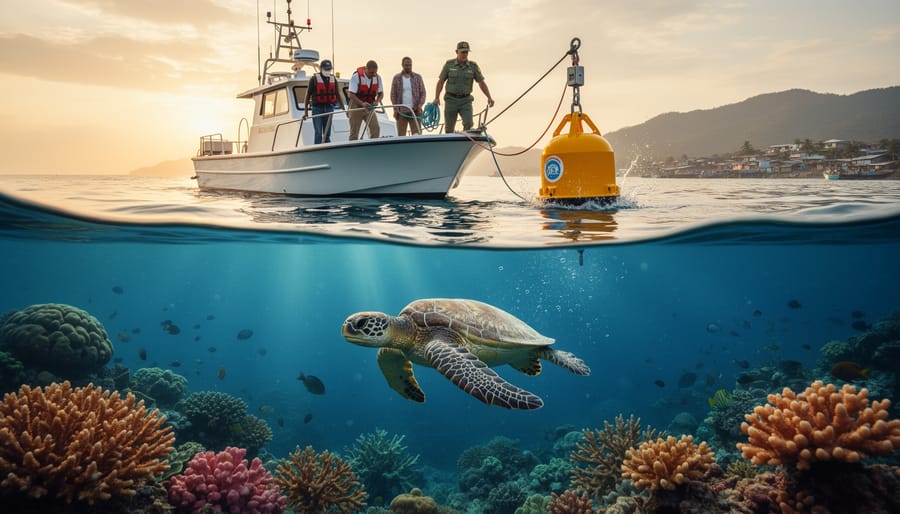
The world’s oceans face unprecedented threats, yet a singular organization has pioneered a science-based approach that transforms how we protect marine ecosystems. Marine Conservation Institute stands at the forefront of global ocean protection efforts, distinguishing itself through rigorous collaboration that brings together governments, scientists, local communities, and conservation organizations to secure lasting protection for marine biodiversity.
Founded on the principle that protecting critical ocean habitats requires more than good intentions, the Institute employs a strategic methodology rooted in peer-reviewed science and measurable outcomes. Their Blue Parks initiative sets the gold standard for marine protected areas worldwide, recognizing sites that meet stringent criteria for effective conservation. Through partnerships spanning six continents, they’ve helped establish protections for millions of square kilometers of ocean, safeguarding critical habitats for endangered species from sea turtles to blue whales.
What makes Marine Conservation Institute uniquely effective is their collaborative framework. Rather than working in isolation, they convene diverse stakeholders, share cutting-edge research, and provide technical expertise to governments developing marine protection policies. Marine biologist Dr. Sarah Hameed, who coordinates several partnership projects, describes the approach as building bridges between science and policy, where local knowledge meets global conservation goals.
This collaborative spirit extends beyond boardrooms into actionable opportunities for concerned citizens, students, and professionals to contribute meaningfully to ocean conservation, creating a movement where collective action drives tangible results.
What Makes Marine Conservation Institute Different
Marine Conservation Institute stands apart from other conservation organizations through its unwavering commitment to science-driven solutions and measurable results. Rather than relying on emotional appeals alone, the Institute bases every recommendation and campaign on rigorous scientific research, ensuring that protected areas genuinely benefit marine ecosystems and the species that depend on them.
At the heart of their approach lies the Global Ocean Refuge System, an ambitious initiative to identify and advocate for the world’s most important marine habitats. This systematic framework evaluates marine protected areas worldwide, distinguishing between areas that exist only on paper and those that deliver meaningful conservation outcomes. By establishing clear criteria for what constitutes effective protection, the Institute provides governments and policymakers with a roadmap for creating marine reserves that actually work.
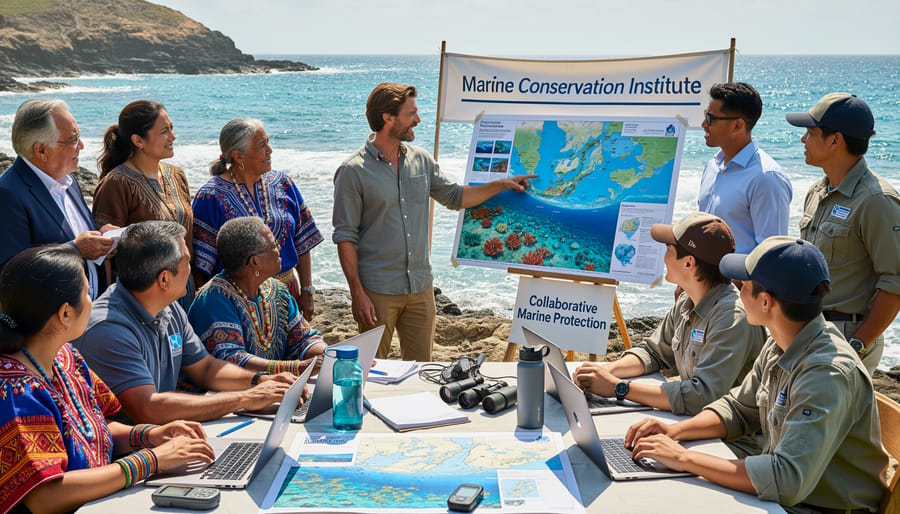
What truly sets Marine Conservation Institute apart is their role as bridge-builders in the conservation community. They don’t work in isolation. Instead, they actively connect government officials, marine scientists, local communities, and conservation organizations, fostering collaborations that might never have happened otherwise. This diplomatic approach recognizes that lasting marine protection requires buy-in from diverse stakeholders, each bringing unique knowledge and resources to the table.
The Institute’s commitment to transparency further distinguishes their work. Through the Marine Protection Atlas, they make complex scientific data accessible to anyone interested in understanding where and how the ocean is being protected. This open-access tool empowers communities, researchers, and decision-makers worldwide to track progress toward global marine conservation goals.
Marine biologist Dr. Sarah Chen, who has collaborated with the Institute on several projects, describes their approach as transformative: “They don’t just identify problems. They bring everyone together to create solutions that work for both marine life and the people who depend on healthy oceans.” This collaborative spirit, combined with scientific rigor and measurable outcomes, positions Marine Conservation Institute as a trusted leader in the global movement to protect our ocean’s most vital ecosystems.
The Power of Multi-Stakeholder Partnerships
Working With Governments and Policy Makers
The Marine Conservation Institute recognizes that lasting ocean protection requires strong governmental partnerships and robust legal frameworks. Through strategic collaborative conservation efforts, the Institute works alongside national governments, international agencies, and policy makers to establish and strengthen marine protected areas worldwide.
One significant policy success came in 2016 when the Institute’s scientific guidance helped expand the Papahānaumokuākea Marine National Monument in Hawaii, ultimately protecting 582,578 square miles of ocean. This achievement demonstrated how rigorous scientific data combined with effective advocacy can influence high-level decision-making. The Institute also played a crucial role in supporting Chile’s creation of multiple large-scale MPAs, protecting critical feeding grounds for whales, seabirds, and countless marine species.
At the international level, the organization contributes expert testimony to United Nations forums and regional fisheries management organizations. Their scientists provide evidence-based recommendations for setting sustainable catch limits and identifying areas requiring urgent protection. This technical expertise proves invaluable when governments seek credible data to inform conservation policies.
Dr. Sarah Morrison, a policy advisor with the Institute, shares her experience: “Watching scientific research translate into actual protection on the water is incredibly rewarding. We provide the tools and evidence that policy makers need to make informed decisions about our ocean’s future.”
Through persistent engagement and trusted relationships, the Institute continues shaping marine conservation policy globally, proving that science-driven advocacy creates measurable change.
Scientific Community Collaborations
The Marine Conservation Institute thrives through dynamic partnerships with leading research institutions, universities, and independent scientists worldwide. These collaborations enable comprehensive ocean assessments that combine cutting-edge technology with field expertise, creating the robust scientific foundation necessary for effective marine protection policies.
Through these partnerships, the Institute conducts habitat mapping surveys, biodiversity assessments, and climate impact studies. Research teams from partner universities contribute specialized knowledge in areas like deep-sea ecology, coral reef restoration, and fisheries management. This collective expertise allows for more thorough evaluations of marine protected area candidates and helps identify critical habitats that require immediate conservation attention.
Dr. Sofia Martinez, a marine biologist from the University of California, recalls her first collaborative expedition with the Institute: “We were surveying an underwater canyon off the Pacific coast when our team discovered a thriving cold-water coral garden that nobody knew existed. Working alongside the Institute’s scientists, we documented over forty species, including several potentially new to science. That discovery directly influenced the expansion of a nearby marine reserve.”
These partnerships extend beyond data collection. Joint research projects often lead to co-authored scientific papers, public symposiums, and educational materials that make complex marine science accessible to broader audiences. The Institute also facilitates connections between early-career researchers and established scientists, creating mentorship opportunities that strengthen the next generation of ocean advocates.
For those interested in contributing to this collaborative work, the Institute regularly posts volunteer opportunities for research assistants, data analysts, and field observers on their website, welcoming participants from diverse scientific backgrounds.
Engaging Local Communities and Indigenous Groups
Successful marine conservation requires more than scientific data—it thrives when local communities and Indigenous groups become active partners in protecting their ocean environments. The Marine Conservation Institute recognizes that these communities possess invaluable traditional ecological knowledge, accumulated over generations of living alongside marine ecosystems. This wisdom offers insights into species behavior, migration patterns, and ecosystem changes that complement modern scientific research.
In the Pacific Islands, the Institute has supported community-led marine protected area initiatives where Indigenous knowledge guides monitoring protocols. Local fishers, who understand seasonal patterns and fish spawning grounds intimately, work alongside marine biologists to establish sustainable fishing zones. These collaborative efforts have resulted in measurably healthier fish populations while respecting cultural practices and ensuring food security.
Dr. Maria Santos, a marine biologist working with coastal communities in Southeast Asia, shares a powerful story: “When we listened to the elders about historical coral reef conditions, we discovered recovery patterns our instruments couldn’t detect alone. Their knowledge filled crucial gaps in our baseline data.”
Community buy-in proves essential for long-term success because local people become conservation stewards rather than passive observers. The Institute facilitates training programs where community members learn scientific monitoring techniques, creating citizen scientists who protect their waters year-round.
For those interested in supporting these initiatives, volunteer opportunities exist to assist with community outreach programs, helping bridge the gap between scientific research and local implementation. When conservation becomes a shared responsibility rooted in both traditional wisdom and modern science, marine ecosystems flourish.
Case Studies: Collaboration in Action
The Blue Parks Initiative
Recognition serves as a powerful catalyst for marine conservation, and the Marine Conservation Institute harnesses this through the Blue Parks Initiative. This innovative award system identifies and celebrates marine protected areas (MPAs) that meet rigorous science-based standards for effective ocean protection. By establishing a clear benchmark for excellence, Blue Parks creates meaningful incentives for governments and management authorities to strengthen their conservation efforts.
The initiative works by evaluating MPAs against comprehensive criteria including biodiversity significance, protection regulations, enforcement capacity, and management effectiveness. Sites that achieve Blue Park status join an elite group recognized globally for their commitment to safeguarding marine ecosystems. This recognition brings tangible benefits beyond prestige—it attracts conservation funding, eco-tourism interest, and international attention that can bolster local economies while protecting ocean wildlife.
What makes Blue Parks particularly effective is its ability to bring diverse stakeholders together around shared success. When a marine protected area receives this designation, it validates the collaborative work of government agencies, local communities, scientists, and conservation organizations. These celebration moments create opportunities to share best practices, document what works, and inspire other sites to elevate their conservation standards.
The initiative also serves an educational function, helping the public understand what truly effective marine protection looks like. Rather than simply counting protected areas, Blue Parks emphasizes quality over quantity. This distinction matters tremendously—studies show that well-managed MPAs deliver exponentially greater benefits for marine biodiversity recovery than poorly enforced ones.
For those inspired by these conservation success stories, the Marine Conservation Institute offers volunteer opportunities to support Blue Parks assessments and advocacy efforts. Marine biologists working with the program often describe the profound satisfaction of witnessing protected areas transform from struggling ecosystems into thriving underwater sanctuaries that future generations can enjoy.
Cross-Border Marine Protected Areas
When gray whales migrate along the Pacific coast or sea turtles navigate between feeding and nesting grounds across entire ocean basins, they don’t recognize human-drawn boundaries. This reality has driven one of marine conservation’s most promising developments: transboundary marine protected areas that safeguard species throughout their entire life cycles.
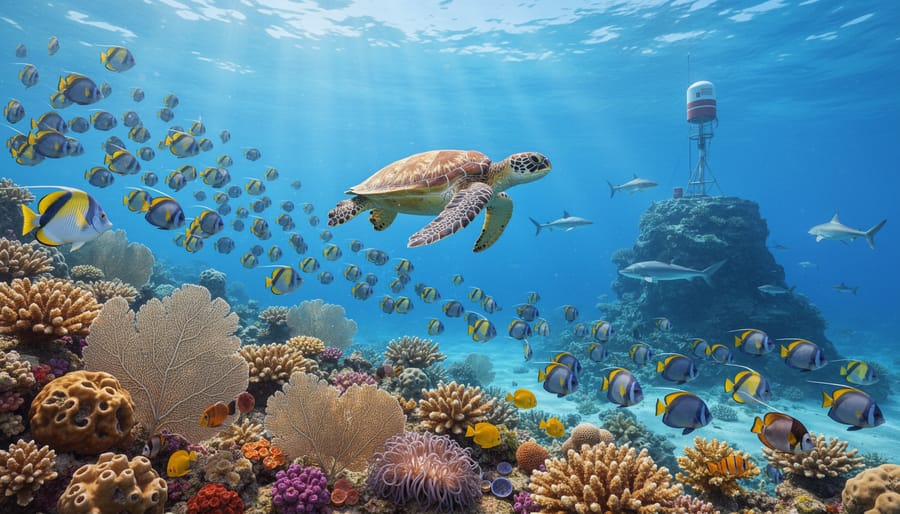
The Eastern Tropical Pacific Marine Corridor stands as a remarkable testament to what international cooperation can achieve. Spanning the waters of Costa Rica, Panama, Colombia, and Ecuador, this network connects four UNESCO World Heritage Sites—Cocos Island, Malpelo, Coiba, and the Galápagos Islands. Together, these nations have created protected swimming highways for hammerhead sharks, whale sharks, sea turtles, and humpback whales that travel between these island ecosystems.
Dr. Elena Ramirez, a marine biologist who has worked extensively in this corridor, shares how collaboration transformed conservation outcomes: “Before coordination between countries, we’d protect a turtle nesting beach in one nation, but the same turtles would face unregulated fishing in neighboring waters. Now we track individuals across borders and adjust protection measures collectively.”
The Mediterranean is witnessing similar success with the Pelagos Sanctuary, where France, Italy, and Monaco jointly protect over 87,000 square kilometers of critical habitat for eight cetacean species. Regular patrols, shared research data, and coordinated enforcement have significantly reduced ship strikes and illegal fishing.
These cross-border initiatives demonstrate that protecting migratory species requires thinking beyond national interests. They also offer unique volunteer opportunities for citizen scientists willing to participate in monitoring programs that span multiple countries, contributing to data collection that informs international management decisions.
How You Can Join These Collaborative Efforts
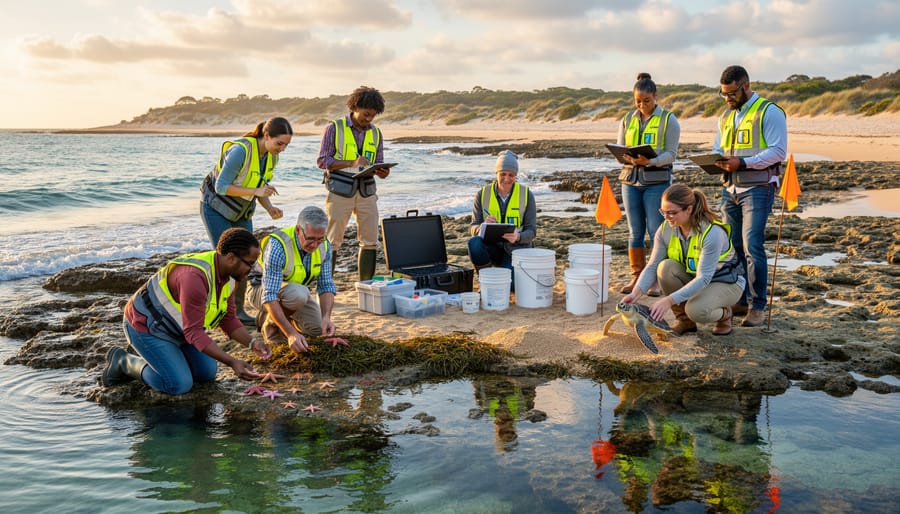
Volunteer and Citizen Science Opportunities
The Marine Conservation Institute welcomes contributions from people of all backgrounds through diverse volunteer and citizen science programs that directly advance marine protection efforts. Whether you’re a seasoned diver, data enthusiast, or simply passionate about ocean health, there’s a meaningful way to contribute.
The Institute’s Marine Protection Atlas project relies heavily on citizen scientists who help identify and document marine protected areas worldwide. Volunteers review government documents, maps, and regulations to verify the existence and quality of protected zones. This crowd-sourced approach has enabled the mapping of thousands of marine protected areas that might otherwise remain unrecognized in global conservation databases.
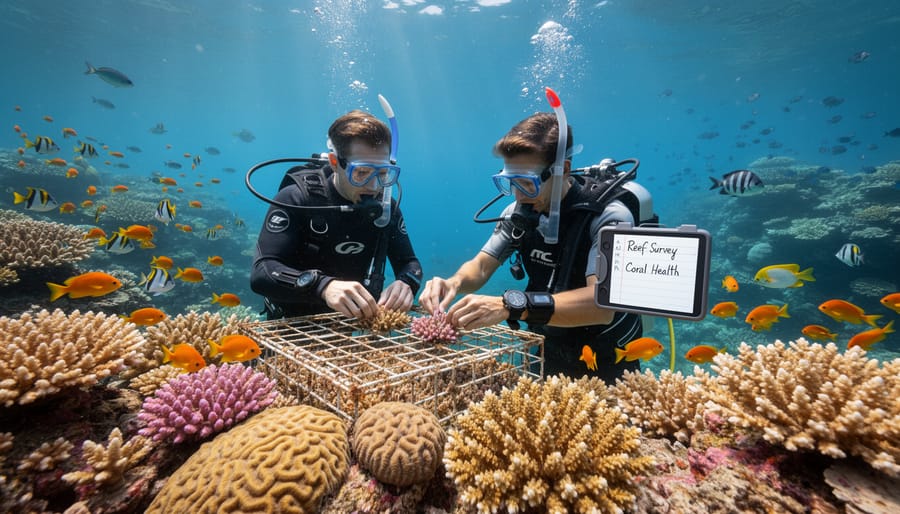
For those with diving experience, the Institute occasionally coordinates underwater survey programs where trained volunteers collect data on species abundance and habitat health within proposed protected areas. These observations provide crucial baseline information that scientists use when advocating for new marine reserves.
Land-based opportunities include participating in beach cleanups organized in partnership with local conservation groups, where collected data about plastic pollution types and quantities feeds into broader research on marine debris patterns. The Institute also maintains an active online community where remote volunteers can contribute by analyzing underwater footage, helping to identify species, or supporting outreach campaigns through social media engagement.
Dr. Sarah Chen, a marine biologist with the Institute, shares: “Every data point contributed by citizen scientists strengthens our evidence base. I’ve seen volunteer observations lead directly to the establishment of critical habitat protections.”
These collaborative efforts demonstrate how individual actions, when coordinated through established networks, create substantial impact for ocean conservation.
Educational Resources and Advocacy
The Marine Conservation Institute offers a wealth of educational resources that empower individuals to become effective advocates for ocean protection in their own communities. Their freely accessible online materials include comprehensive ocean health reports, interactive maps of Marine Protected Areas, and downloadable toolkits that translate complex marine science into actionable information for local campaigns.
Educators can access curriculum guides designed for various age groups, featuring real-world examples of proven protection strategies that connect classroom learning to global conservation efforts. These resources help students understand how local watersheds affect distant coral reefs and why protecting nearby coastlines contributes to worldwide marine biodiversity.
For community advocates, the Institute provides advocacy training webinars and campaign templates that demonstrate how to effectively engage with local policymakers. Marine biologist Dr. Sarah Chen shares her experience: “Using the Institute’s data visualizations, I helped my coastal town establish its first marine sanctuary. The resources made scientific evidence accessible to everyone, from fishermen to city council members.”
You can amplify your impact by organizing beach cleanups paired with educational workshops, sharing the Institute’s social media campaigns, or hosting community screenings of their documentary content. The Institute’s Blue Parks recognition program offers a framework for communities to showcase their marine conservation achievements while connecting to a global network of ocean protectors. By bridging local stewardship with international movements, every action contributes to safeguarding our shared ocean heritage.
The Future of Collaborative Marine Conservation
The ocean’s future depends on our ability to work together across borders, sectors, and disciplines. As marine threats intensify—from climate change to overfishing—collaborative conservation is evolving rapidly, powered by innovation and unprecedented global cooperation.
Emerging technologies are revolutionizing how conservation partners share data and coordinate efforts. Artificial intelligence now helps analyze vast amounts of satellite imagery to detect illegal fishing in real-time, while environmental DNA (eDNA) sampling allows scientists from different institutions to assess biodiversity without invasive methods. Cloud-based platforms enable researchers worldwide to access and contribute to shared databases, creating a global knowledge network that strengthens every local conservation effort. Marine biologist Dr. Sarah Chen notes, “Technology has transformed collaboration from occasional conferences to daily, real-time partnerships. We can now respond to threats within hours, not months.”
The growing recognition that ocean health is inseparable from human wellbeing is driving new partnership models. Indigenous communities, who have stewarded marine resources for millennia, are increasingly recognized as essential partners rather than stakeholders to consult. This shift brings traditional ecological knowledge into conversation with modern science, creating more effective and culturally respectful conservation strategies.
International cooperation is expanding beyond governments to include corporations, philanthropists, and citizen scientists. Companies are partnering with conservation organizations to develop sustainable supply chains, while crowdfunding platforms connect everyday people with specific protection projects. Volunteer opportunities now range from beach cleanups to contributing to marine monitoring apps, making participation accessible to anyone with passion for ocean health.
Challenges remain significant. Climate change continues accelerating, funding gaps persist, and political will fluctuates. However, the trajectory is encouraging. Every new partnership strengthens the conservation network, and every protected area becomes a model for others. The future of our oceans lies not in isolated heroics but in the collective determination of diverse partners working toward a shared vision: thriving marine ecosystems for generations to come.
The future of our oceans depends on what we do today, and no single organization, government, or individual can tackle the immense challenges facing marine ecosystems alone. The Marine Conservation Institute has demonstrated that when scientists, policymakers, local communities, and passionate individuals unite around a common goal, remarkable progress becomes possible. From establishing marine protected areas that safeguard critical habitats to building international coalitions that transcend borders, collaborative conservation creates ripples of positive change that extend far beyond any single initiative.
Your voice and actions matter in this global movement. Whether you’re a marine biologist seeking research partnerships, an educator looking to inspire the next generation of ocean advocates, or simply someone who cares about the future of our blue planet, there are countless ways to contribute. Consider volunteering with Marine Conservation Institute’s ongoing projects, participating in citizen science initiatives, or joining their network of supporters working to expand ocean protection worldwide.
The stories shared by marine biologists who’ve witnessed the recovery of once-depleted ecosystems remind us why this work matters. Every protected area, every successful partnership, and every person who joins this cause represents hope for our oceans. Together, we possess the knowledge, tools, and collective will to create lasting change. The question isn’t whether we can make a difference, it’s whether we’ll choose to act. Join the Marine Conservation Institute today and become part of the solution our oceans desperately need.

jessica
Ava Singh is an environmental writer and marine sustainability advocate with a deep commitment to protecting the world's oceans and coastal communities. With a background in environmental policy and a passion for storytelling, Ava brings complex topics to life through clear, engaging content that educates and empowers readers. At the Marine Biodiversity & Sustainability Learning Center, Ava focuses on sharing impactful stories about community engagement, policy innovations, and conservation strategies. Her writing bridges the gap between science and the public, encouraging people to take part in preserving marine biodiversity. When she’s not writing, Ava collaborates with local initiatives to promote eco-conscious living and sustainable development, ensuring her work makes a difference both on the page and in the real world.