Marine Biodiversity Science Center

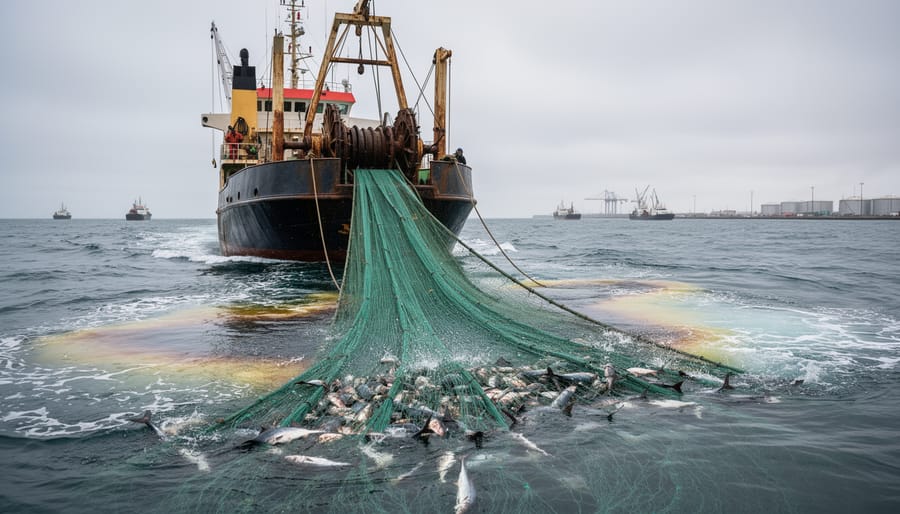
Every year, governments worldwide pour over $35 billion into fisheries subsidies, payments designed to support fishing communities but that often fuel a devastating paradox: the money intended to help fishers is actively destroying the oceans they depend on. Roughly 60% of these subsidies are considered harmful, directly enabling overfishing by reducing operational costs for industrial fleets, funding larger vessels, and subsidizing fuel that allows boats to travel farther and fish longer than economically viable without government support.
The consequences ripple across marine ecosystems. Subsidized fleets deplete fish stocks faster than they can recover, with over one-third of global fisheries now pushed beyond sustainable limits. Coastal communities lose their livelihoods as local waters empty, while illegal, unreported, and unregulated fishing thrives under the cover of subsidized operations. The ocean’s capacity to provide food security, support biodiversity, and regulate climate hangs in the balance.
Yet this crisis presents an extraordinary opportunity. Reform these subsidies, redirect funds toward sustainable fishing practices and marine protection, and we unlock billions of dollars for ocean conservation. Recent international negotiations through the World Trade Organization have brought subsidy reform closer to reality than ever before. Marine biologists, economists, and fishing communities increasingly agree: ending harmful subsidies isn’t just environmentally necessary, it’s economically smart. The path forward requires understanding which subsidies cause harm, recognizing successful reform models, and supporting policy changes that protect both ocean health and the people who depend on thriving seas.
What Are Fisheries Subsidies and Why Do They Matter?
The Three Types of Subsidies
Not all fisheries subsidies impact ocean health in the same way. Understanding the three main categories helps us identify which policies to reform and which to preserve.
Beneficial subsidies actively support ocean health and sustainable fishing practices. These include funding for fisheries management systems, scientific research to monitor fish populations, and programs that help fishing communities transition to more sustainable methods. For example, subsidies that support marine protected area enforcement or fund stock assessments provide crucial data that prevents overfishing. Dr. Maria Santos, a marine biologist who has worked with small-scale fisheries in Southeast Asia, shares that “investment in community-based monitoring programs has transformed how local fishers understand and protect their resources.”
Ambiguous subsidies fall into a gray area, with outcomes depending on how they’re implemented. Infrastructure investments like harbor improvements or fuel tax exemptions can either support sustainable operations or enable harmful practices. A well-designed port facility might include fish processing equipment that reduces waste, while poorly regulated infrastructure could simply make it easier to land illegal catches.
Harmful subsidies are the most concerning category. These capacity-enhancing subsidies help fishing fleets catch more fish, often beyond sustainable limits. They include payments for new vessel construction, fuel subsidies that make it economically viable to fish in remote areas, and gear upgrades that increase fishing power. These subsidies directly contribute to the overcapacity crisis, where the global fishing fleet is estimated to be two to three times larger than what ocean ecosystems can sustainably support.
The Hidden Cost to Marine Life
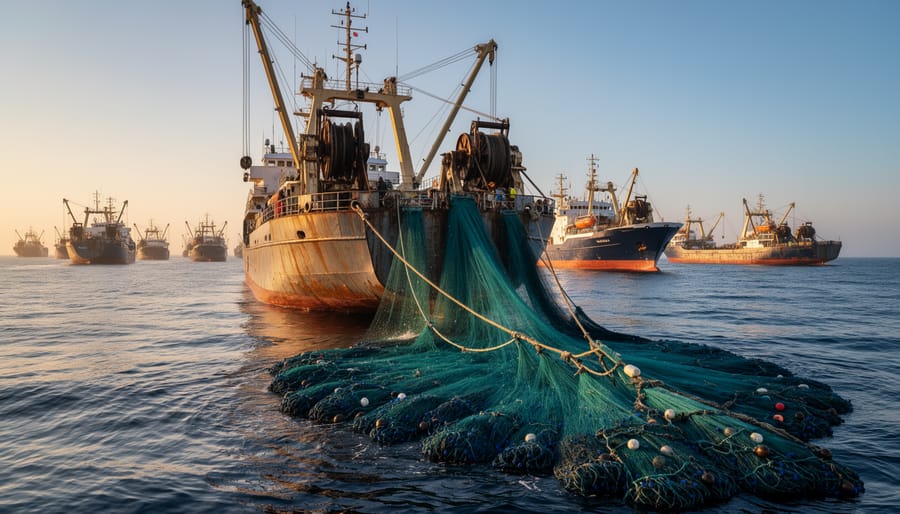
Harmful fisheries subsidies act as financial accelerants for practices that devastate our oceans. By artificially reducing operational costs, these subsidies enable industrial fleets to fish longer, travel farther, and extract more marine life than would otherwise be economically viable. The consequences are staggering: approximately 35% of global fish stocks are now overfished, a threefold increase since the 1970s, with subsidized fleets responsible for much of this depletion.
The destruction extends beyond target species. Subsidized fishing operations contribute significantly to bycatch—the unintended capture of dolphins, sea turtles, sharks, and seabirds. Industrial bottom trawling, made profitable through fuel subsidies, scrapes away critical seafloor habitats that serve as nurseries for countless species. Marine biologist Dr. Elena Martinez witnessed this firsthand during research off West Africa, where subsidized foreign fleets decimated local fish populations, leaving coastal communities without their primary protein source.
This pattern of exploitation pushes vulnerable species toward extinction and disrupts the intricate food webs essential for ocean health. When apex predators disappear and foundational species decline, we risk triggering ecosystem collapse—a cascade effect that can take decades to reverse, if recovery proves possible at all.
The Global Crisis: By the Numbers
The numbers tell a sobering story. According to the United Nations Food and Agriculture Organization, over 35% of global fish stocks are currently overfished, while 57% are maximally sustainably fished, leaving little room for error. Behind these statistics lie real consequences: coastal communities losing their primary food source, marine ecosystems collapsing, and billions of dollars in potential economic value disappearing beneath the waves.
At the heart of this crisis sits approximately $35 billion in annual fisheries subsidies provided by governments worldwide. Research published in Marine Policy reveals that roughly $22 billion of these subsidies directly contribute to overfishing by funding fuel costs, vessel construction, and fishing operations that would otherwise be economically unviable. These harmful subsidies enable industrial fleets to venture farther, fish longer, and extract more than ocean ecosystems can sustain.
The economic toll extends far beyond lost fish. The World Bank estimates that poor fisheries management, largely driven by perverse subsidies, costs the global economy up to $83 billion annually in lost potential revenue. For small-scale fishing communities, particularly in developing nations, this translates to lost livelihoods, food insecurity, and forced migration from ancestral coastal homes.
Dr. Maria Santos, a marine biologist who has studied West African fisheries for two decades, witnessed this firsthand. “I watched foreign industrial vessels, heavily subsidized by their governments, systematically strip the waters off Senegal,” she recalls. “Local fishers who had sustainably harvested these waters for generations suddenly couldn’t compete. Within five years, I saw once-thriving fishing villages turn into ghost towns as families abandoned their traditional way of life.”
The environmental damage compounds these human costs. Subsidized bottom trawling destroys critical seafloor habitats, while subsidized longline fishing kills countless seabirds and marine mammals as bycatch. When fish populations collapse, entire food webs unravel, affecting species from plankton to apex predators. The ocean’s capacity to provide food, regulate climate, and support biodiversity diminishes with each subsidized trawl through already depleted waters.
Why Subsidy Reform Is a Game-Changer for Ocean Conservation
Turning Billions Into Conservation Funding
The $22 billion spent annually on harmful fisheries subsidies represents an enormous untapped resource for ocean conservation. Redirecting even a portion of these funds could transform how we protect and manage marine ecosystems.
Consider the potential: that $22 billion could establish and maintain thousands of marine protected areas, fund comprehensive monitoring programs using satellite technology and on-the-ground observers, strengthen enforcement against illegal fishing, and support fishing communities transitioning to sustainable practices. Currently, the global budget for marine conservation falls dramatically short of what’s needed, yet we’re simultaneously pouring billions into practices that actively harm ocean health.
Real-world models demonstrate this approach works. When the European Union reformed its fisheries subsidies in 2014, redirecting funds toward sustainable fishing infrastructure and monitoring, several member states saw improvements in fish stock recovery within five years. Indonesia’s subsidy reform pilot program reallocated $50 million from fuel subsidies to coastal community development and sustainable gear technology, creating alternative livelihoods for 15,000 fishers while reducing bycatch by 30 percent.
Projections from the conservation finance sector suggest that redirecting just half of harmful subsidies could fully fund the monitoring and enforcement needs of existing marine protected areas worldwide, while establishing sustainable fishing programs in developing nations. This isn’t just theoretical. We have the frameworks, the technology, and increasingly, the political will to make this shift happen.
Success Stories From Around the World
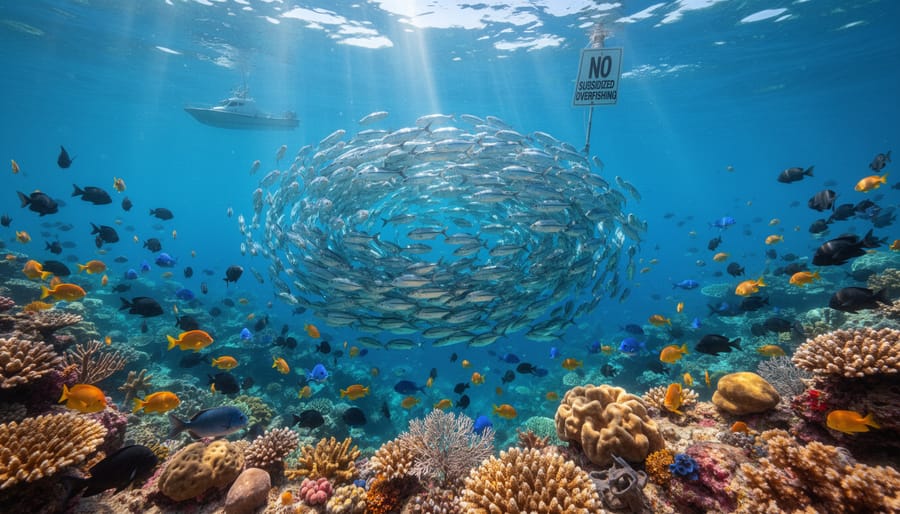
Around the globe, forward-thinking countries are demonstrating that reforming fisheries subsidies can deliver remarkable wins for ocean health, fishing communities, and national economies. These success stories offer concrete proof that change is not only possible but beneficial.
Chile stands out as a pioneer in subsidy reform. In the early 2000s, the country redirected harmful capacity-enhancing subsidies toward research, monitoring, and fisheries management systems. This shift contributed to the recovery of depleted stocks like Chilean hake and jack mackerel. By 2015, several key fisheries achieved Marine Stewardship Council certification, opening premium export markets and increasing income for fishing communities. As marine biologist Dr. Carmen Espinoza notes from her work in Chilean waters, “We’ve watched fishing families transition from barely surviving to thriving, all while fish populations rebound. It proves conservation and livelihoods aren’t opposing forces.”
Indonesia implemented groundbreaking reforms starting in 2014 by eliminating fuel subsidies that primarily benefited large industrial vessels, many engaged in illegal fishing. The savings were redirected toward patrol vessels, community-based management, and sustainable aquaculture development. Within five years, illegal fishing declined by over 90 percent in monitored areas, contributing significantly to ecosystem restoration in critical habitats.
The European Union’s Common Fisheries Policy reforms, strengthened in 2013, phased out subsidies for vessel construction and modernization while increasing support for selective fishing gear, data collection, and small-scale fisheries. Several previously overfished stocks, including North Sea cod and Atlantic bluefin tuna, have shown encouraging recovery trends.
These examples demonstrate that subsidy reform creates a positive cycle: healthier oceans support more fish, which sustains fishing communities long-term while protecting marine biodiversity for future generations.
The WTO Agreement: A Historic Turning Point
After decades of advocacy and negotiation, the world achieved a breakthrough moment in June 2022 when the World Trade Organization adopted its Agreement on Fisheries Subsidies. This landmark treaty represents the first time WTO members have agreed to limit subsidies that harm the environment, marking a pivotal shift in how international trade policy intersects with ocean conservation.
The agreement tackles the most damaging subsidies head-on by prohibiting support for three critical areas: illegal, unreported, and unregulated fishing; fishing of overfished stocks; and fishing on the unregulated high seas. These provisions directly address the financial incentives that have allowed destructive fishing practices to persist despite their devastating impact on marine ecosystems. For the first time, countries cannot use public funds to reward vessels or operators engaged in these harmful activities.
What makes this agreement particularly powerful is its recognition of developing nations’ needs. The treaty includes special provisions and technical assistance to help countries with limited resources implement these rules effectively, ensuring that the transition toward sustainable fishing doesn’t disproportionately burden communities already facing economic challenges.
However, seasoned marine conservationists view this achievement with measured optimism. While the agreement represents genuine progress, significant gaps remain. Notably, it doesn’t address capacity-enhancing subsidies for fishing in national waters, which still allow governments to expand their fleets beyond sustainable levels. The agreement also relies heavily on member countries to monitor and enforce compliance, which varies widely across nations with different regulatory capacities.
The path forward requires continued momentum. Negotiations continue on additional provisions to strengthen the treaty’s scope, particularly regarding fuel subsidies and vessel construction support that enable overcapacity. Marine biologist Dr. Sarah Chen, who has advised on subsidy reform for fifteen years, reflects this realistic hope: “This agreement proves change is possible when science, policy, and public pressure align. Now we must build on this foundation to finish the job of redirecting these billions toward restoration and sustainable livelihoods instead of depletion.”
What Effective Reform Looks Like
Supporting Fishing Communities Through Transition
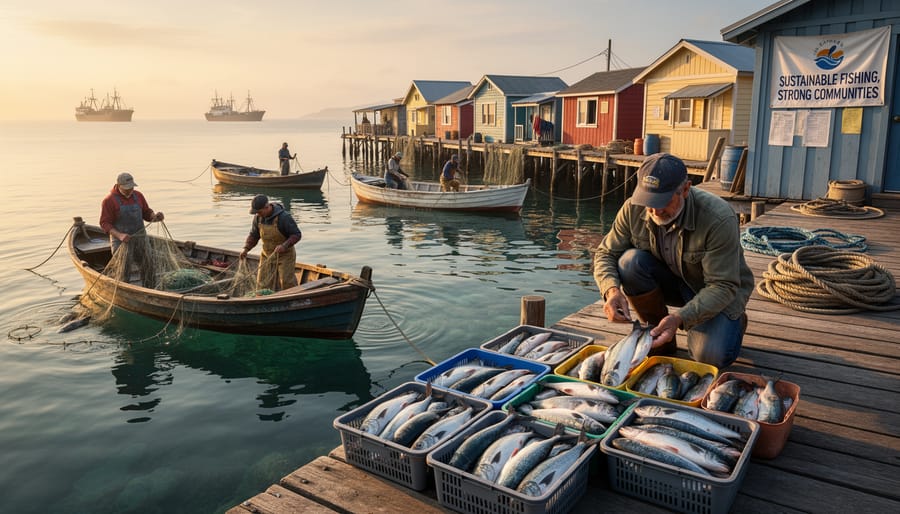
Fisheries subsidies reform isn’t just about protecting fish populations—it’s about protecting people. Coastal communities worldwide depend on healthy oceans for their livelihoods, and thoughtful transition policies can ensure no one gets left behind while we move toward sustainability.
Successful reform includes comprehensive retraining programs that help fishers develop new skills in aquaculture, marine monitoring, or vessel maintenance. Some communities have discovered opportunities in ecotourism, where former fishers guide visitors on snorkeling trips or educational boat tours, sharing their deep knowledge of marine ecosystems in new ways. Support for transitioning to sustainable fishing methods—including grants for selective gear and technical assistance—allows fishers to continue their traditions while reducing environmental impact.
Consider the story of Maria Santos from a small coastal village in the Philippines. When harmful subsidies ended and a marine protected area was established nearby, Maria worried about her family’s future. Through a government-supported transition program, she received training in sustainable fishing techniques and a small loan to upgrade her equipment. Within two years, her catch improved as fish populations recovered in the protected zone. She now mentors other fishers making similar transitions and serves on a local fisheries management council.
Fair transition policies recognize fishing as cultural heritage, not just economic activity. They provide adequate compensation during adjustment periods, involve fishing communities in decision-making, and ensure benefits from healthier oceans reach those who sacrificed most. When communities participate in designing their own futures, conservation and prosperity can flourish together.
How You Can Make a Difference
The fight against harmful fisheries subsidies requires action at multiple levels, and you have a vital role to play. Whether you’re a researcher, educator, student, or concerned citizen, your voice and choices can contribute to meaningful reform.
Start by becoming an informed consumer. Choose seafood certified by organizations like the Marine Stewardship Council, which ensures sustainable fishing practices. Download seafood guides from Seafood Watch or similar programs to make responsible purchasing decisions. By supporting sustainable fisheries with your wallet, you send a clear market signal that conservation matters.
Advocacy is equally crucial. Contact your elected representatives to express support for subsidy reform and sustainable ocean policies. Organizations like Oceana and The Pew Charitable Trusts provide templates and talking points to make this process straightforward. Share articles and research about fisheries subsidies on social media to educate your networks. Many people remain unaware of how their tax dollars fund practices that deplete ocean resources.
Consider supporting organizations actively working on subsidy reform. The Environmental Defense Fund, World Wildlife Fund, and local marine conservation groups conduct research, lobby for policy changes, and monitor fishing practices. Even small donations help fund this essential work.
For those seeking hands-on involvement, volunteer opportunities abound. The Marine Biodiversity Science Center offers programs where you can contribute to research projects, assist with community education initiatives, and participate in coastal monitoring activities. Marine biologist Dr. Sarah Chen, who volunteers with the Center, shares: “Working directly with communities helps them understand how subsidy reform protects both ocean health and their long-term fishing livelihoods. These conversations matter.”
Educators can incorporate ocean economics into curricula using resources from the Ocean Literacy Network. Stay informed through newsletters from marine conservation organizations and scientific journals like Marine Policy. Consider attending webinars and conferences focused on ocean governance.
Remember, systemic change happens through sustained collective action. Your engagement, combined with thousands of others, creates the momentum necessary to transform how we fund and manage our ocean resources.
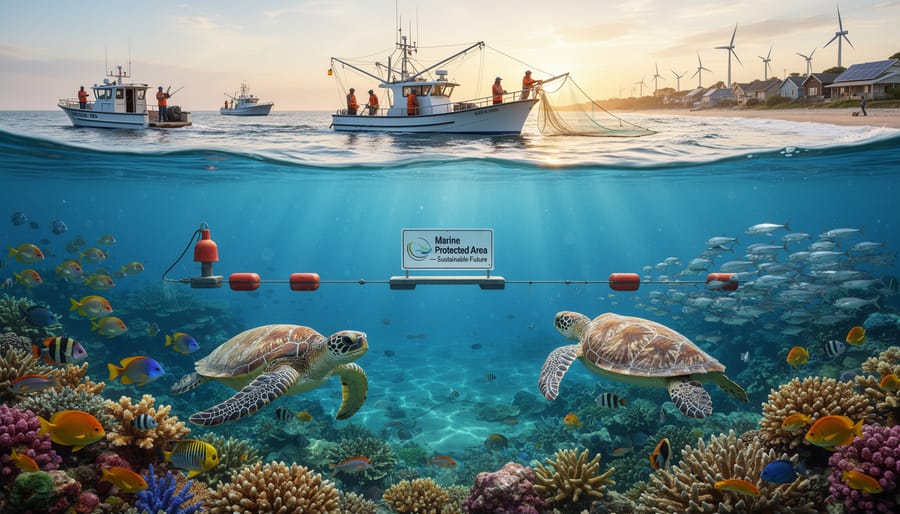
The good news is that we’re not starting from zero. Around the world, momentum is building toward meaningful fisheries subsidy reform, and the progress already achieved demonstrates that change is not only necessary but entirely possible. The 2022 World Trade Organization Agreement on Fisheries Subsidies marked a historic turning point, with member nations committing to eliminate harmful subsidies that contribute to illegal, unreported, and unregulated fishing and overfishing of depleted stocks. While implementation challenges remain, this agreement proves that international cooperation on ocean health can move from aspiration to action.
This transformation won’t happen through policy alone. It requires the combined efforts of marine scientists who provide critical data on fish populations, conservationists who advocate for sustainable practices, policymakers willing to prioritize long-term ocean health over short-term political gains, and citizens who demand accountability from their governments and seafood suppliers. Each voice matters in this movement.
You have a role to play, whether you’re a researcher contributing to stock assessments, an educator raising awareness about sustainable seafood choices, or simply someone who cares about the future of our oceans. Support organizations working on subsidy reform, engage with your elected officials about ocean policy, and stay informed about where your seafood comes from. The path to healthier oceans runs directly through smarter economic policies, and together, we have the knowledge, tools, and growing political will to redirect billions of dollars from ocean destruction to ocean protection. The question isn’t whether we can reform fisheries subsidies; it’s whether we’ll act with the urgency our oceans deserve.

jessica
Ava Singh is an environmental writer and marine sustainability advocate with a deep commitment to protecting the world's oceans and coastal communities. With a background in environmental policy and a passion for storytelling, Ava brings complex topics to life through clear, engaging content that educates and empowers readers. At the Marine Biodiversity & Sustainability Learning Center, Ava focuses on sharing impactful stories about community engagement, policy innovations, and conservation strategies. Her writing bridges the gap between science and the public, encouraging people to take part in preserving marine biodiversity. When she’s not writing, Ava collaborates with local initiatives to promote eco-conscious living and sustainable development, ensuring her work makes a difference both on the page and in the real world.